
Rome, Trevi Fountain — History & Facts
Could a single brushstroke hold eternity? In Rome, Trevi Fountain, the artist captures not just a moment, but the tumultuous emotions that swirl beneath the surface of a serene scene. Look to the bottom center of the canvas where the crystal-clear waters cascade over rocks, the focal point drawing your gaze with its kinetic energy. Notice how the fountain, bathed in a soft golden light, emerges as a symbol of both beauty and turmoil. The figures surrounding it, rendered in delicate detail, seem caught between admiration and indifference, their gestures subtly illustrating a tension that contradicts the tranquility of the place.
The warm earth tones contrast sharply with the cool blues of the water, emphasizing the dynamic interplay between nature and human creation. Delve deeper into the quiet unease that permeates the composition. The juxtaposition of the lively fountain and the stillness of the onlookers suggests a tension born from contrasting desires. The delicate folds of the draped garments hint at stories untold, and the violent brushwork that shapes the fountain itself reveals how beauty can mask conflict.
The very essence of the scene evokes the struggle between artifice and emotion, suggesting that even moments of tranquility are often tinged with the chaos of life. Ludwig Johann Passini created this piece in 1862 while residing in Rome, during a period when the city was undergoing significant political and cultural transformation. The art world was shifting towards Romanticism, and artists were increasingly influenced by emotional depth and individual expression. This painting reflects that zeitgeist, capturing the allure of the Trevi Fountain while hinting at the underlying violence of change surrounding it.
More Artworks by Ludwig Johann Passini
Browse all →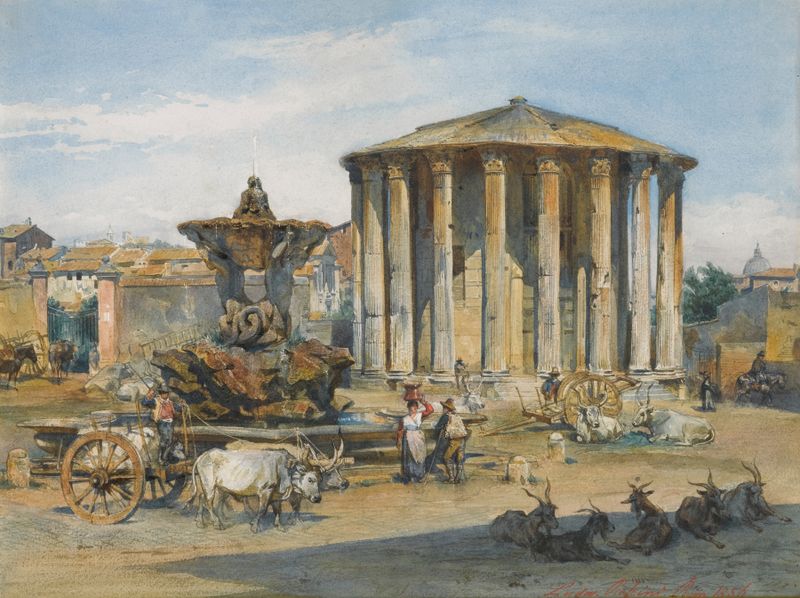
More Architecture Art
Browse all →
The statue of Liberty
Frédéric Auguste Bartholdi

View of Houses in Delft, Known as ‘The Little Street’
Johannes Vermeer

View of Houses in Delft, Known as ‘The Little Street’
Johannes Vermeer

The Cathedral in Rouen. The portal, Grey Weather
Claude Monet

The yellow house
Vincent van Gogh

The Church in Auvers-sur-Oise, View from the Chevet
Vincent van Gogh