
Roskilde Cathedral — History & Facts
When did color learn to lie? The canvas invites you to ponder the depths of absence, where layers of paint give voice to the void. In this depiction of Roskilde Cathedral, shades of muted grays and soft earth tones oscillate between reality and illusion, echoing silence that feels almost palpable. Look to the upper section of the painting, where the cathedral’s soaring spires reach towards the heavens. Notice how the delicate brushwork captures the play of light against the stone, each stroke revealing the intricate details of Gothic architecture.
The juxtaposition of the darkened foreground against the illuminated background creates a dynamic tension, drawing your eye towards the towering structure while leaving the ground shrouded in uncertainty. Hidden within this masterpiece are emotional tensions that whisper of longing and solitude. The absence of people suggests a space left untouched, a liminal moment frozen in time. This sense of void resonates with the viewer, as if the architecture stands not just as a structure, but as a testament to the human experience—one that grapples with faith, memory, and the passage of time.
The color choices mirror the feelings of melancholy that permeate the scene, inviting introspection rather than celebration. Created in 1848, the artist found himself amidst a rapidly changing world. The burgeoning Romantic movement was redefining artistic expression, favoring emotion over classical restraint. Kieldrup, reflecting these shifting tides, sought to capture not just the physical beauty of the cathedral, but the deeper, often unspoken sentiments that architectural forms can evoke.
In this work, he leaves behind a dialogue between absence and presence, a theme that resonates far beyond the confines of the frame.
More Artworks by Anton Eduard Kieldrup
Browse all →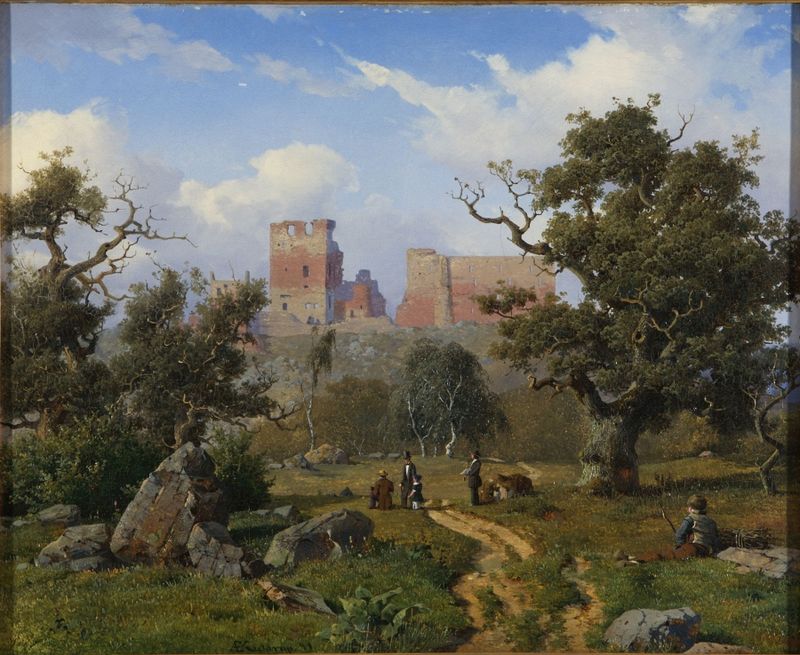
More Architecture Art
Browse all →
The statue of Liberty
Frédéric Auguste Bartholdi

View of Houses in Delft, Known as ‘The Little Street’
Johannes Vermeer

View of Houses in Delft, Known as ‘The Little Street’
Johannes Vermeer

The Cathedral in Rouen. The portal, Grey Weather
Claude Monet

The yellow house
Vincent van Gogh

The Church in Auvers-sur-Oise, View from the Chevet
Vincent van Gogh