
Rothenburg — History & Facts
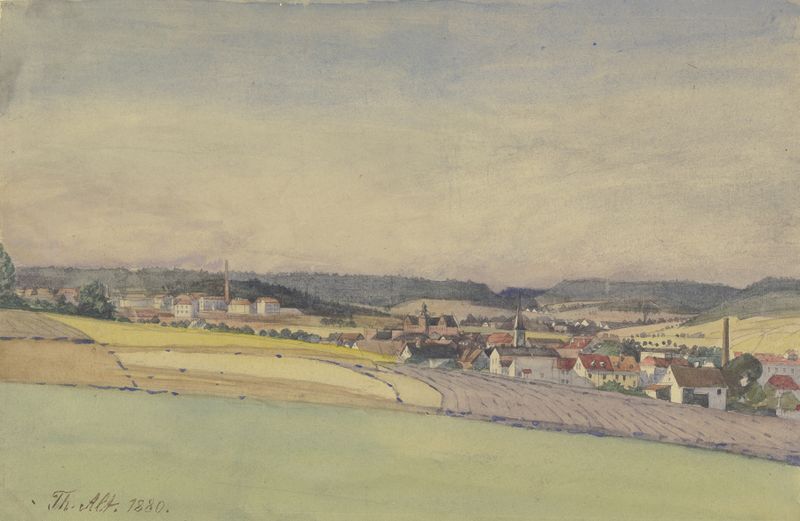
In the quietude of an artist’s vision, serenity emerges amidst the tumult of the world. Look directly at the center of the composition, where the charming medieval buildings rise against a gentle blue sky. The warm hues of gold and terracotta create a harmonious balance, inviting the viewer to explore the intricate details of the architecture. Notice how the painter's brush captures the texture of the stone, each stroke revealing the history and stories preserved within these walls, while the patterned rooftops lead the eye across the canvas. As you delve deeper, observe the interplay of light and shadow that dances across the scene, evoking a sense of time standing still.
The contrast between the vivid colors of the buildings and the subdued tones of the cobblestone streets reflects the tension between human craftsmanship and nature’s enduring presence. This duality creates an emotional resonance, suggesting that amidst the vibrancy of life, a serene stillness can be found. Theodor Alt created this artwork during a time of artistic exploration, likely in the late 19th century, when many artists were re-discovering the romantic qualities of historical towns. Known for his depictions of German landscapes and architecture, Alt sought to capture the essence of places beloved by his contemporaries.
His work reflects a moment in art history when the appreciation of local culture and heritage flourished, inviting viewers to pause and cherish the beauty nestled within the familiar chaos of everyday life.
More Artworks by Theodor Alt
Browse all →

More Architecture Art
Browse all →
The statue of Liberty
Frédéric Auguste Bartholdi

View of Houses in Delft, Known as ‘The Little Street’
Johannes Vermeer

View of Houses in Delft, Known as ‘The Little Street’
Johannes Vermeer

The Cathedral in Rouen. The portal, Grey Weather
Claude Monet

The yellow house
Vincent van Gogh

The Church in Auvers-sur-Oise, View from the Chevet
Vincent van Gogh