Rottach On Lake Tegernsee — History & Facts
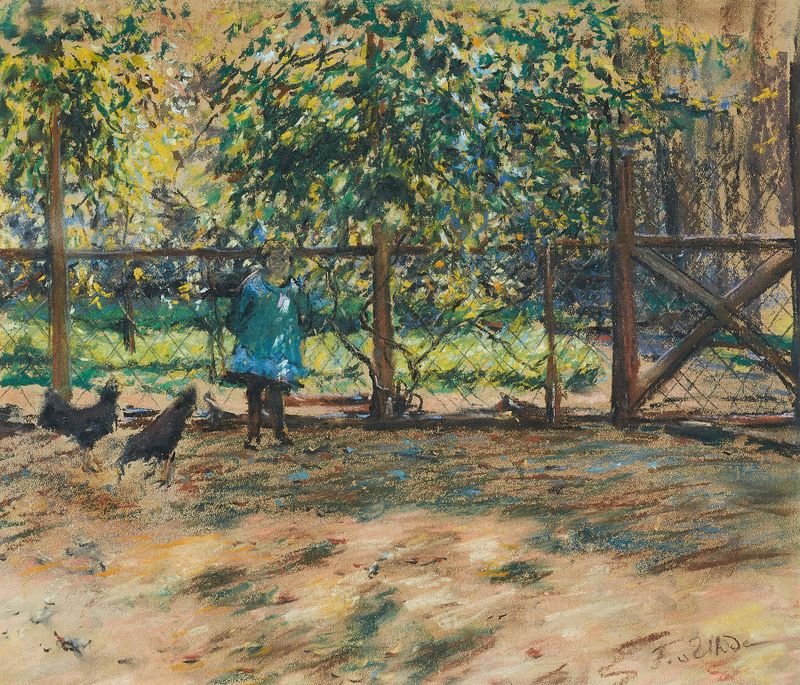
Can beauty exist without sorrow? In the stillness of Rottach On Lake Tegernsee, the viewer grapples with an uneasy calm, where serenity intertwines with an undercurrent of madness. The placid waters reflect a world untroubled on the surface, yet the shadows suggest that beneath the tranquility lies a complex tapestry of emotions. Look to the horizon where the lake meets the distant hills, a gentle gradient of blues and greens that draws the eye into the depths of the landscape. Notice how the light dances across the surface of the water, punctuated by ripples that hint at life below.
The brushwork is both meticulous and impressionistic, capturing the fleeting nature of the moment, while the soft pastels evoke a sense of nostalgia. Each stroke seems to whisper secrets of the land, inviting an exploration that occasionally feels disquieting. Delve deeper into the painting, and the contrasts emerge. The juxtaposition of the idyllic village against the vastness of the lake illustrates a tension between human existence and nature's overwhelming presence.
The serene sky, filled with soft clouds, may seem inviting, yet the vibrant hues hint at the chaos lying beneath the surface. This duality raises questions about the fragility of peace and the lurking madness that often colors our perceptions of paradise. During the creation of this work, the artist was immersed in the late 19th-century German art scene, a time marked by shifting perspectives and burgeoning Impressionism. While the exact date remains unknown, Rottach On Lake Tegernsee reflects von Uhde's deeply personal interpretations of his surroundings, echoing the broader artistic movement that sought to capture ephemeral beauty amidst the changing landscape of modernity.