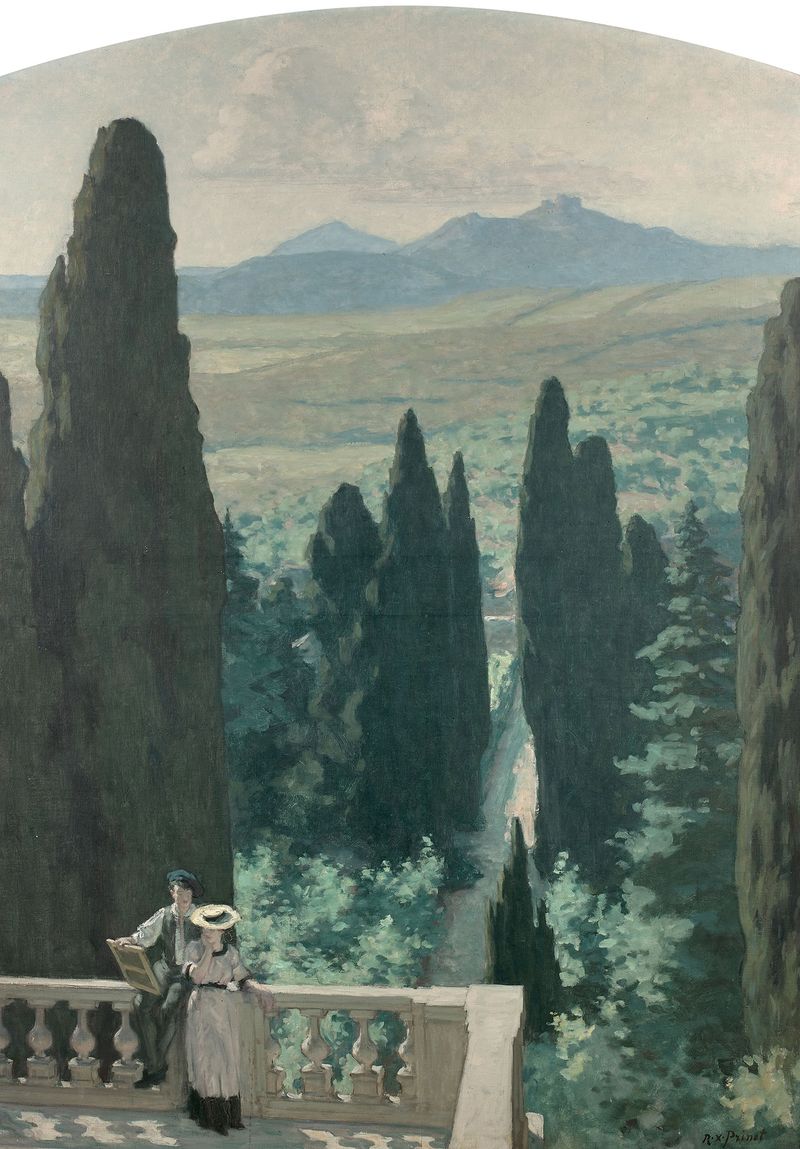
Route de Roye à Noyon; les arbres coupés — History & Facts
In the stark aftermath of destruction, fragility flourishes amongst the remnants of a once-vibrant landscape. Here, the trees stand not as mere stumps, but as silent witnesses to the ravages of time and conflict, embodying both loss and resilience. Focus on the earthy tones that dominate the canvas, where browns and muted greens intertwine to create a somber atmosphere. Notice how the light filters through the desolate landscape, casting long shadows that stretch across the ground, guiding your gaze towards the fallen trunks.
The careful brushwork suggests a sense of motion, as if the wind still whispers through the empty branches, and the horizon reveals a tension between the past and the desolation of the present. In this artwork, the contrast between the vibrant life that once filled the scene and the stark remains evokes a profound sense of melancholy. The vibrant greens hint at the return of nature, yet the severed trees speak of fragility and vulnerability, reminding us of the tenuous balance between life and destruction. The absence of leaves accentuates the echoes of what was lost, serving as a poignant reminder of the impact of war and human intervention on the environment. In 1917, Prinet created this piece amidst the tumult of World War I, a time when landscapes across Europe were ravaged by conflict.
Living in France during this period, he was compelled to capture the emotional landscape of his homeland, reflecting both a personal and collective grief. This work is a testament to that era, merging his artistic vision with the harsh realities surrounding him, ultimately highlighting the fragility of beauty in the face of devastation.