
Ruine Paulenstein bei Stampfen in Ungarn — History & Facts
Could a single brushstroke hold eternity? In Ruine Paulenstein bei Stampfen in Ungarn, the essence of decay is captured as if time itself has breathed life into a forgotten relic. Look to the center of the canvas, where the crumbling stone of the ruins invites your gaze. The muted palette of grays and browns breathes a sense of age, while hints of green suggest nature reclaiming its territory. Notice how Holzer employs soft brushstrokes to create a textured surface that evokes both fragility and strength.
The light filters through the trees, casting gentle shadows that dance across the dilapidated structure, instilling a reverberating silence that echoes the passage of years. This interplay of light and shadow reveals a profound contrast — the enduring presence of nature against the inevitable decay of human creation. Small details, like the delicate vines creeping over stone, symbolize resilience amid abandonment. The decay itself becomes a character, telling a story of loss and transformation, urging us to reflect on our own impermanence and the fleeting nature of existence. During the time Holzer painted this piece, the world was undergoing considerable change, although the exact date remains unknown.
He was immersed in the Romantic movement, which emphasized the sublime beauty of nature and the emotional impact of ruins. His experiences in the landscapes of Hungary likely influenced his choice to depict a structure that speaks to both the grandeur of the past and the relentless march of time.
More Artworks by Joseph Holzer
Browse all →
Blick auf die Burgruine Devin
Joseph Holzer

Weg am Felshang
Joseph Holzer

A Carpathian Landscape with a Shepherd and His Cattle
Joseph Holzer

Kapelle auf dem Kalvarienberge
Joseph Holzer

Der stille Waldwinkel
Joseph Holzer
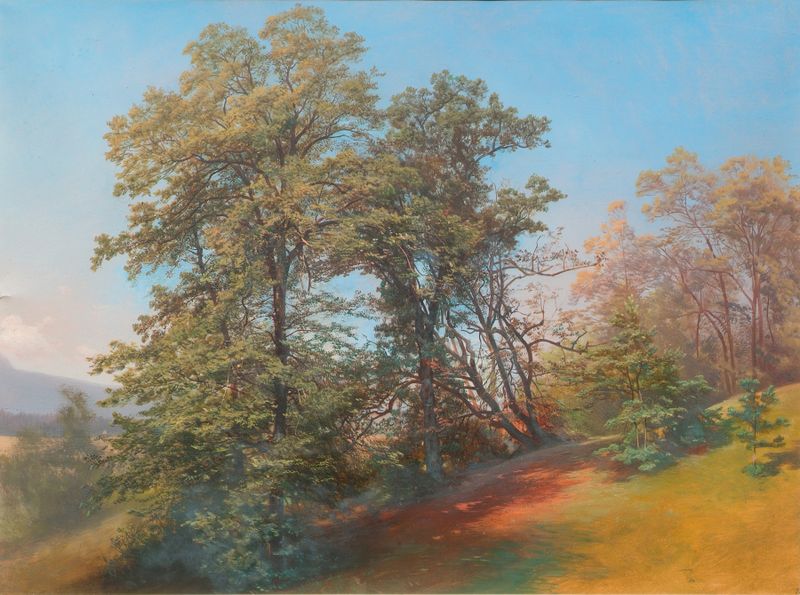
Baumgruppe am Mönchsberg in Salzburg
Joseph Holzer
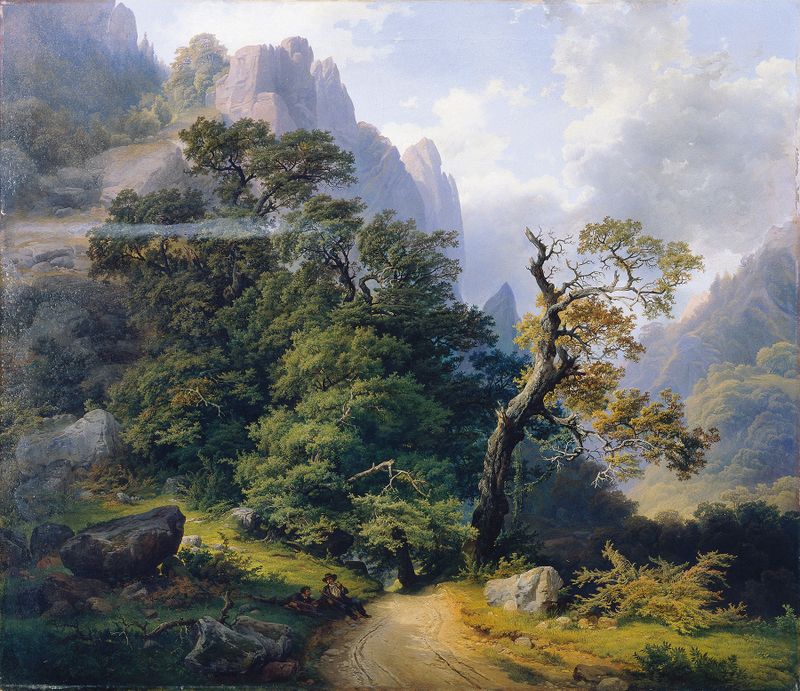
Berglandschaft
Joseph Holzer

Partie aus dem Pinzgau
Joseph Holzer

Motiv aus dem Wienerwald
Joseph Holzer

Der Hohe Göll
Joseph Holzer





