
Ruine Weitenegg — History & Facts
Did the painter know this moment would outlive them? The quietude of Ruine Weitenegg resonates with a profound sense of solitude, evoking the stillness that lingers long after a life has faded. It whispers of time, memory, and the weight of existence, drawing us into its contemplative embrace. Look closely at the crumbling structure nestled against an expansive, muted landscape. The artist deftly uses soft, earthy tones, inviting you to trace the outlines of the ruins, where nature's grasp intertwines with remnants of human endeavor.
Notice how the light gently caresses the weathered stones, illuminating their textures and imperfections, while shadows stretch languidly across the ground, hinting at stories untold. It’s a poignant reminder of transience and the relentless march of time. Delve deeper into the emotional undertones. The absence of figures amplifies the feeling of isolation, as if the ruins themselves are the sole witnesses to the passage of time.
The surrounding landscape, expansive yet desolate, evokes a melancholic beauty that reflects both decay and resilience. Each crack in the stone speaks to forgotten narratives, embodying the loneliness of places abandoned but not forgotten, inviting contemplation on what once was. Joseph Holzer painted this work during a period marked by personal introspection and the broader narrative of Romanticism in art. While the exact date remains unknown, it is clear that the artist was engaged in exploring themes of nature’s dominance over human creations.
At this time, the art world was increasingly valuing emotion and individual experience, a backdrop against which Holzer's exploration of solitude and decay found a resonant voice.
More Artworks by Joseph Holzer
Browse all →
Blick auf die Burgruine Devin
Joseph Holzer

Weg am Felshang
Joseph Holzer

A Carpathian Landscape with a Shepherd and His Cattle
Joseph Holzer

Kapelle auf dem Kalvarienberge
Joseph Holzer

Der stille Waldwinkel
Joseph Holzer
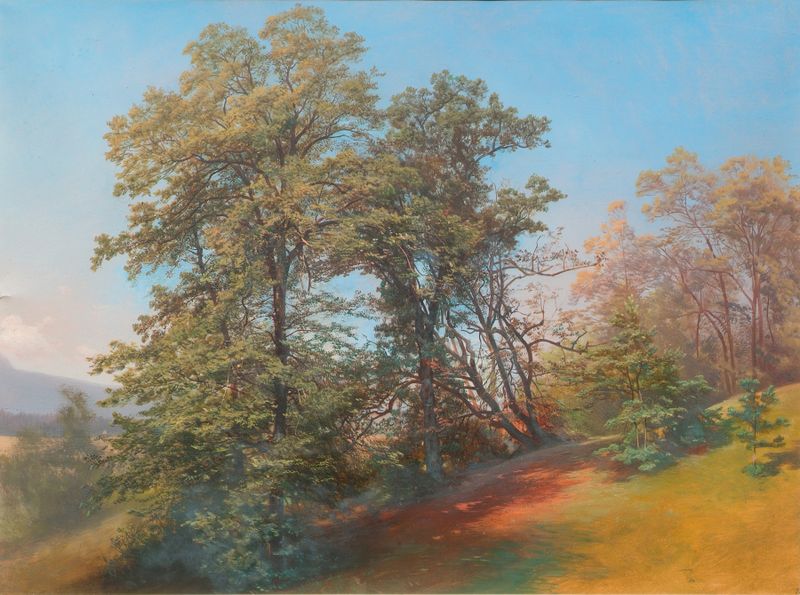
Baumgruppe am Mönchsberg in Salzburg
Joseph Holzer
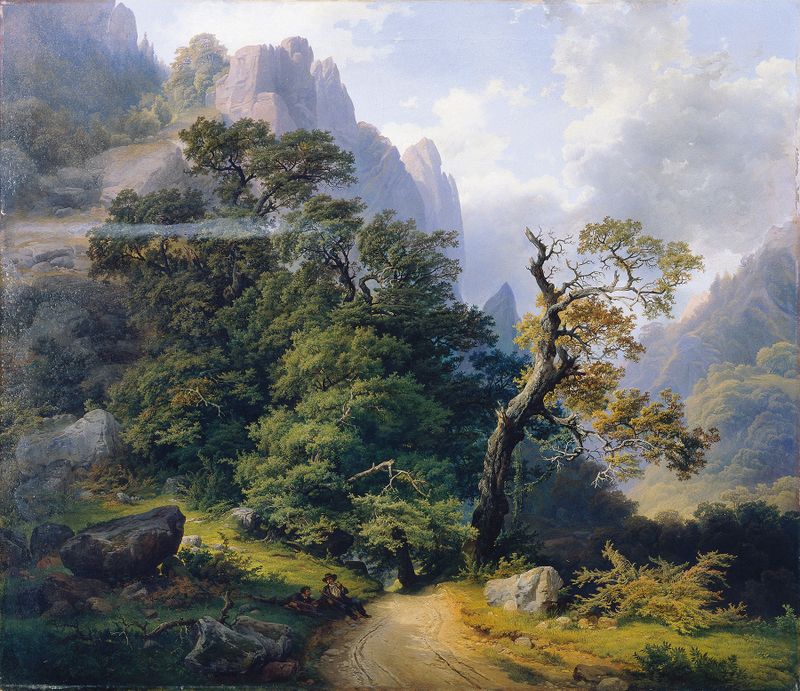
Berglandschaft
Joseph Holzer

Partie aus dem Pinzgau
Joseph Holzer

Motiv aus dem Wienerwald
Joseph Holzer

Der Hohe Göll
Joseph Holzer





