Ruinen von Tiryns — History & Facts
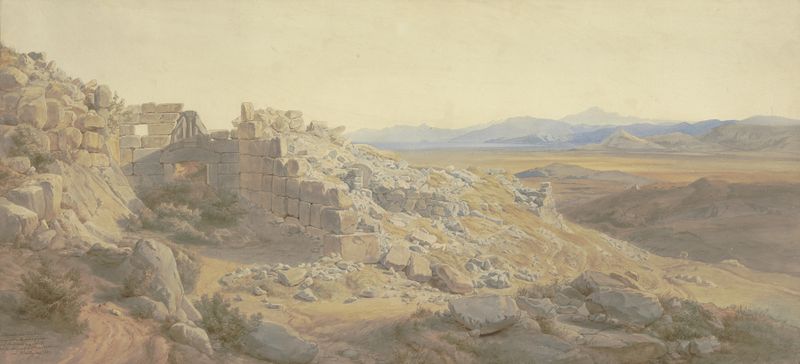
Who listens when art speaks of silence? In Ruinen von Tiryns, the stillness of ancient ruins evokes a profound contemplation on the passage of time and the echoes of what once was. Each crumbling stone whispers stories of movement, of lives that breathed within its walls, now left to the embrace of nature. Focus on the left side of the canvas, where the sun breaks through a veil of clouds, illuminating the weathered stones. Notice how the golden light dances upon the rugged surface, accentuating the textures and inviting you to trace the contours of history.
The artist's careful brushwork contrasts the solidity of the ruins with the fluidity of the surrounding landscape, employing earthy tones that blend seamlessly into the sky, creating harmony between decay and vitality. Delve into the subtleties of the composition: the juxtaposition of the imposing structure against the soft, bending grasses suggests a timeless struggle between man-made and natural forces. Each shadow cast by the ruins feels like a reminder of loss, while the hints of foliage signify hope and rebirth. This duality of permanence and transience ignites an emotional tension, compelling the viewer to reflect on their own place within the continuum of existence. In 1854, while painting this work, Harveng was immersed in a burgeoning interest in Romanticism, a movement that emphasized the sublime beauty of nature and the ruins of the past.
He created Ruinen von Tiryns in Germany, a time when artists sought to capture not just the physical realities but the deeper, often melancholic emotions tied to monumental spaces, critiquing the rapid industrialization of their world.