Ruins of the castle in Czorsztyn — History & Facts
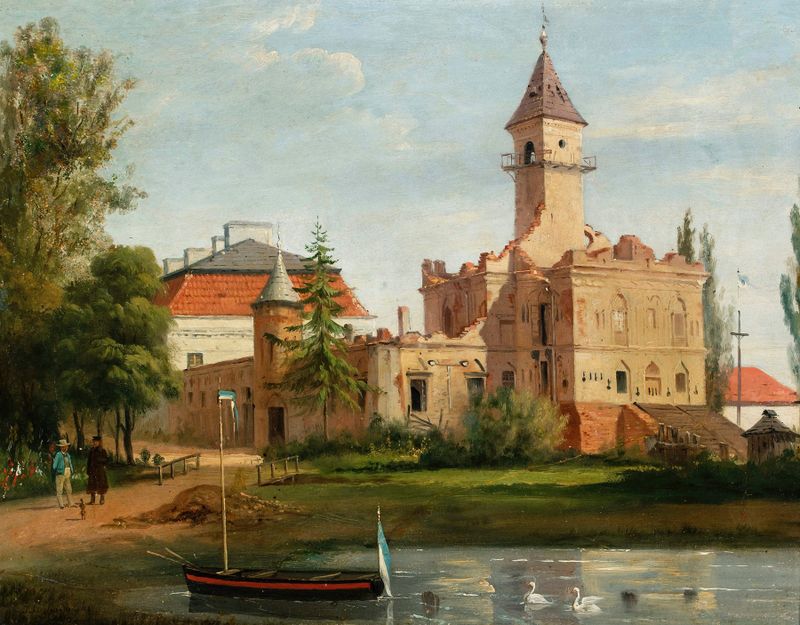
Could a single brushstroke hold eternity? In the quiet embrace of Ruins of the Castle in Czorsztyn, January Suchodolski captures the ephemeral beauty of decay and the silent stories that endure beyond time—a reminder of ecstasy found in the past. Look to the left at the towering remnants of the castle, their jagged outlines softened by the gentle hues of dusk. Notice how the warm light bathes the crumbling stone, illuminating patches of green where nature begins to reclaim its territory. The composition draws the eye upwards, leading to a sweeping sky alive with brushstrokes ranging from deep indigos to delicate pastels, creating a vibrant contrast that exudes both grandeur and nostalgia.
Each stroke tells a tale of resilience against the inevitable passage of time. In this artwork, the interplay of light and shadow reflects the duality of existence—what is lost and what is cherished. The ruins symbolize the weight of history, while the lush surroundings suggest a promise of renewal. The castle, though in decay, stands tall against encroaching nature, evoking a sense of melancholy intertwined with beauty.
Suchodolski captures not just a scene, but an emotion—an ecstasy rooted in the fleeting moments of life that linger in memory. In 1869, Suchodolski painted this scene while navigating the complexities of Poland's shifting cultural landscape. The artist found himself inspired by the romanticism of nature and history, producing works that resonated with national pride amidst the backdrop of political turbulence. At this time, there was a growing appreciation for landscape painting, offering Suchodolski a platform to explore deeper themes through the lens of his homeland’s forgotten ruins.