
Ruins of the Memnonium, Thebes. Dec. 5th, 1838. — History & Facts
In the stillness of ancient ruins, the echoes of history linger like whispered secrets, urging us to listen more closely. The fragments of a grand civilization speak to us, awakening an ecstatic reverence for what once was. Focus your gaze on the majestic columns rising against a washed-out sky, their stoic forms etched with the passage of time. Look closely at the intricate carvings that adorn their surfaces, telling stories of gods and pharaohs in a language lost to most.
Notice how the soft, sandy tones of the stone are warmed by the embracing light, casting delicate shadows that dance across the foreground, revealing both fragility and strength. In this piece, contrasts abound: the unyielding permanence of the ruins juxtaposed with the ephemeral play of light, signifying the tension between existence and decay. Each shadow seems to echo the voices of the past, while the bare landscape hints at the erosion of memory itself. The viewer is left with a sense of longing and connection, each detail inviting deeper reflection on the beauty of impermanence. During the years from 1846 to 1849, the artist found himself in a phase of exploration and discovery, traveling through Egypt and capturing the splendor of its antiquities.
The world around him was awakening to the fascination with Eastern cultures, as archaeological discoveries captivated Europe. As he painted Ruins of the Memnonium, Thebes, he was not just documenting a site but weaving a tapestry of human experience, reflecting a society enamored with its own history while yearning for a deeper understanding of its roots.
More Artworks by David Roberts
Browse all →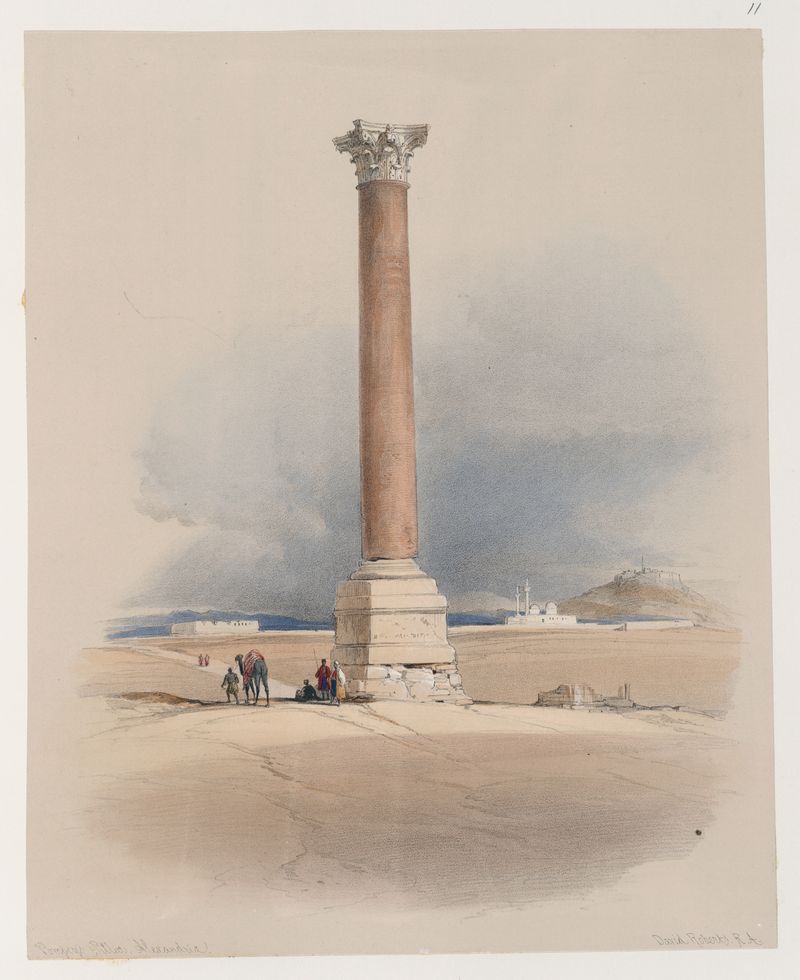
Pompey’s Pillar, Alexandria.
David Roberts

Approach to the Fortress of Ibrim.
David Roberts

Karnac [Karnak]. Nov. 29th, 1838.
David Roberts
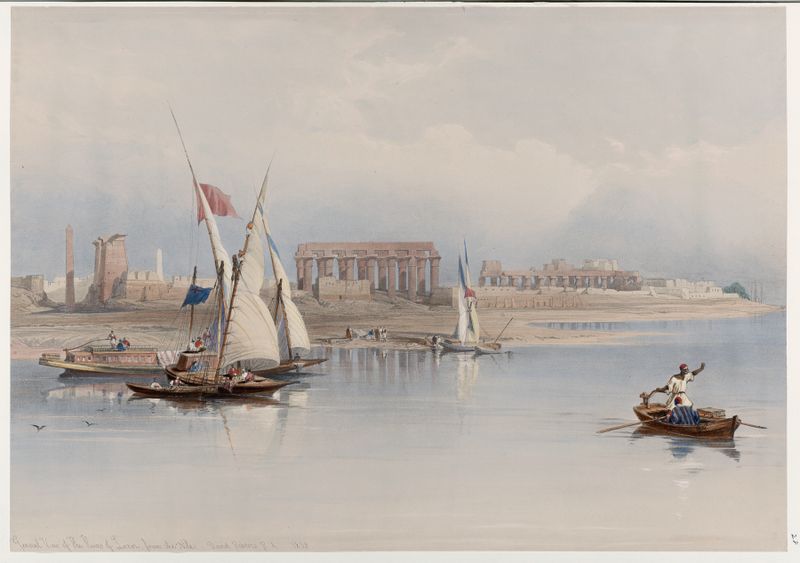
General view of the ruins of Luxor, from the Nile. 1838.
David Roberts

Statues of Memnon at Thebes, during the inundation.
David Roberts

Entrance to the tombs of the kings of Thebes. Bab-el-Malouk [Bîbân al-Mulûk].
David Roberts

The Fortress of the Alhambra, Granada
David Roberts
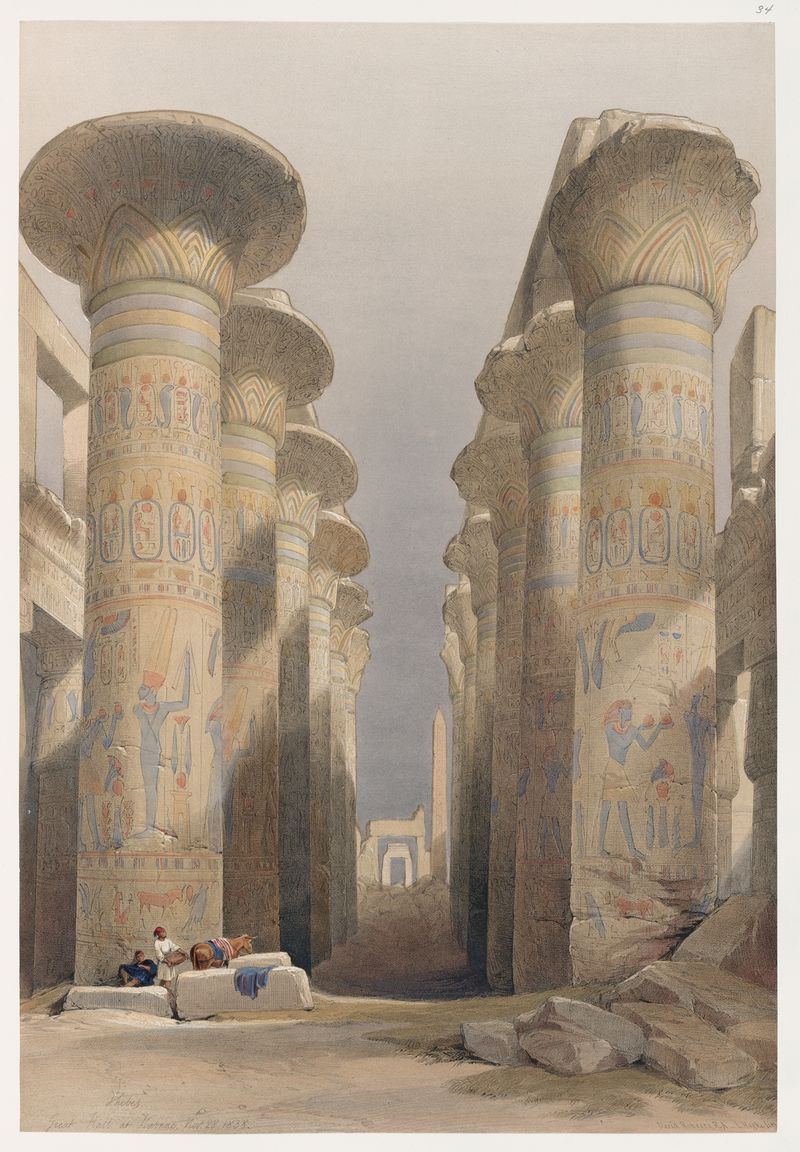
Thebes. Great Hall at Karnak. Nov. 28, 1838.
David Roberts
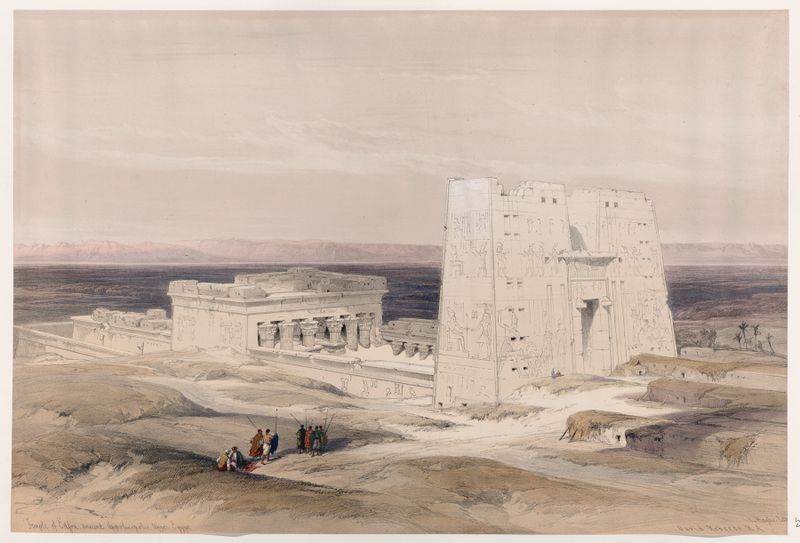
Temple of Edfou [Idfû], ancient Appolinopolis, Upper Egypt.
David Roberts

Temple of Kalabshee [Kalabsha, Kalâbishah], Nubia. Nov. 1838.
David Roberts
More Architecture Art
Browse all →
The statue of Liberty
Frédéric Auguste Bartholdi

View of Houses in Delft, Known as ‘The Little Street’
Johannes Vermeer

View of Houses in Delft, Known as ‘The Little Street’
Johannes Vermeer

The Cathedral in Rouen. The portal, Grey Weather
Claude Monet

The yellow house
Vincent van Gogh

The Church in Auvers-sur-Oise, View from the Chevet
Vincent van Gogh