
Russian Church — History & Facts
Within the stillness of this artwork lies a profound melancholy that resonates deeply, whispering truths of loss and longing. Look to the center where the domes rise majestically, their intricate details inviting you to explore the delicate interplay between light and shadow. Notice how soft hues of blue and warm gold blend seamlessly, creating a harmonious tension that evokes a sense of reverence. The flawless lines of architecture pull your gaze upward, suggesting an aspiration beyond the earthly, while the surrounding landscape grounds the spiritual towering above. Yet, beneath the beauty lies an emotional complexity.
The stark contrast between the church’s grandeur and the barren nature surrounding it hints at isolation, as if the structure stands as a solemn sentinel amidst forgotten dreams. Small figures in the foreground, perhaps parishioners, appear diminutive against the monumental façade, embodying the struggle between faith and the weight of existence. This juxtaposition invites contemplation on the nature of belief and the quiet despair that often accompanies it. Painted during a time when such monumental architecture was both a personal and national aspiration, the artist found himself amidst a shifting artistic landscape in the early 19th century.
Known for merging classical forms with emerging Romantic sensibilities, he sought to capture the transcendent power of faith, reflecting the tumultuous spirit of an era caught between tradition and innovation.
More Artworks by Leo Von Klenze
Browse all →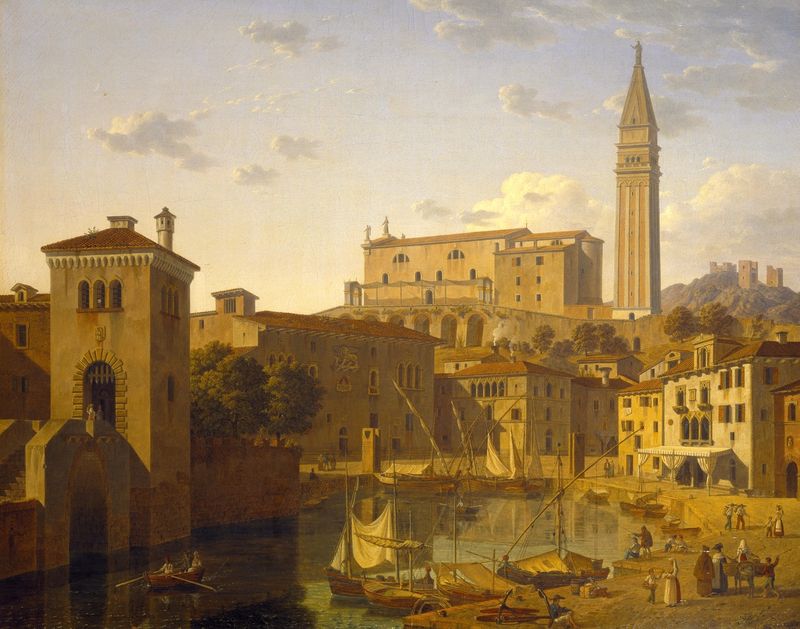
More Architecture Art
Browse all →
The statue of Liberty
Frédéric Auguste Bartholdi

View of Houses in Delft, Known as ‘The Little Street’
Johannes Vermeer

View of Houses in Delft, Known as ‘The Little Street’
Johannes Vermeer

The Cathedral in Rouen. The portal, Grey Weather
Claude Monet

The yellow house
Vincent van Gogh

The Church in Auvers-sur-Oise, View from the Chevet
Vincent van Gogh