
Saint Barbara — History & Facts
Could a single brushstroke hold eternity? In Saint Barbara, Jean Bellegambe captures the essence of obsession, weaving a narrative that lingers long after the gaze has passed. Look to the center of the canvas, where the saint stands poised, elegantly draped in flowing garments that ripple like soft whispers. Notice how the light caresses her delicate features, illuminating the intricacies of her expression—poised yet burdened. The backdrop, a muted tapestry of deep greens and browns, serves to amplify her presence, while hints of gold subtly beckon the eye to the halo hovering above her head.
Each brushstroke is deliberate, transforming texture into emotion, and inviting the viewer into a world where light and shadow dance eternally. Delve deeper into the symbolism embedded within the work. The tower in the background, a reference to her imprisonment, looms as both physical barrier and a metaphor for her faith—a steadfast resolve against the trials she faces. The intricate details in her jewelry and the serene yet penetrating gaze speak to her duality: a woman caught between earthly beauty and divine purpose.
The contrast between her serene demeanor and the weight of her sacrifice hints at the complexities of devotion and the burdens that accompany it. Painted around 1520, this piece emerged during a time of increasing religious fervor in Europe, reflecting the tensions of the Reformation. Bellegambe, working in northern France, was known for his vivid depictions of saints and intricate narratives. He crafted Saint Barbara amidst a cultural landscape ripe with spiritual exploration, capturing not just a moment but the very essence of faith under siege.
More Artworks by Jean Bellegambe
Browse all →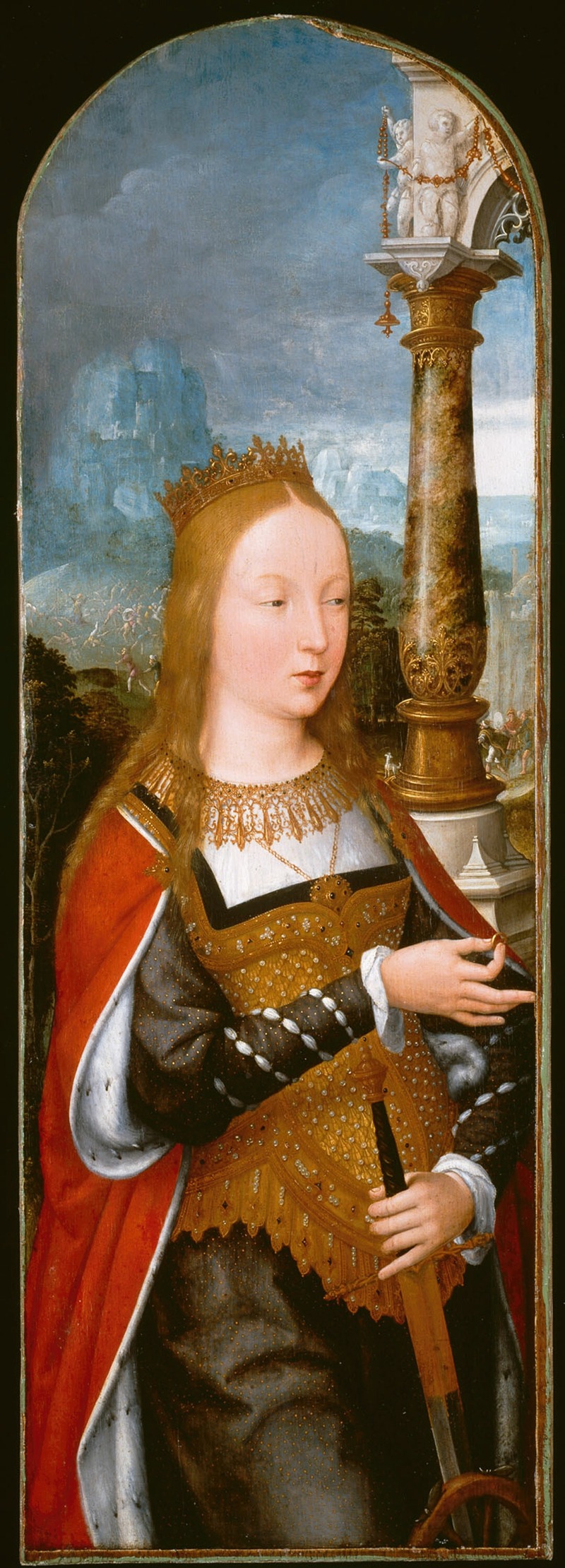
More Religious Art
Browse all →
The Return of the Prodigal Son
Rembrandt van Rijn

The Garden of Earthly Delights
El Bosco

Count Orgaz’ funeral
El Greco

The Hundred Guilder Print: the central piece with Christ preaching, the plate arched
Rembrandt van Rijn

The Descent from the Cross
Rogier van der Weyden

The return of the prodigal son
Rembrandt van Rijn