Saint Clair après l’incendie — History & Facts
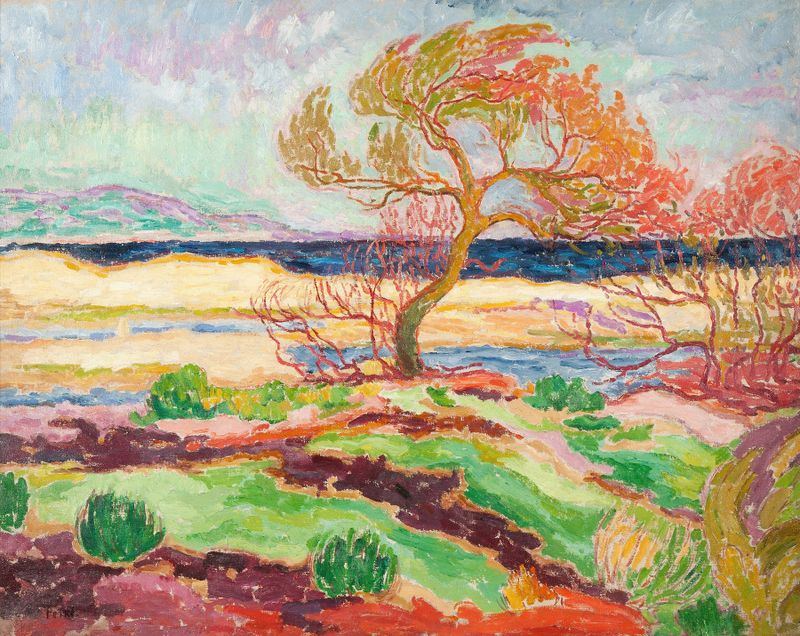
What secret hides in the quiet of the canvas? Beneath the surface of this artwork lies a profound exploration of grief, rendered with delicate strokes and muted hues. Look to the left at the large, still figures standing in the aftermath of a fire. Their faces are shrouded in a veil of melancholy, capturing the weight of loss as they survey the charred remains of what once was. Notice how the light softly illuminates the edges of their forms, contrasting with the dark, ashy backdrop that envelops the scene.
The use of earth tones deepens the emotional resonance, inviting the viewer to linger in this moment of contemplation and sorrow. Amidst the desolation, there exists an unspoken bond between the figures, a shared sorrow reflected in their posture and gaze. The subtle nuances in their expressions reveal a spectrum of emotions—resilience, despair, and an aching nostalgia for what has been lost. As a backdrop, the remnants of the fire serve not only as a physical destruction but as a metaphorical representation of the fragility of life and memory, igniting a powerful sense of empathy in the viewer. During this period, Peské was deeply influenced by the turmoil of his surroundings, possibly reflecting on personal and collective tragedies.
Painted at a time when he was grappling with the emotional aftermath of World War I, this work embodies the artist's response to the chaos and despair that colored the early 20th century art scene. His approach captured the intimate struggles of humanity, transforming grief into a universal language that resonates through time.