
Saint John the Evangelist — History & Facts
What if beauty was never meant to be finished? In Saint John the Evangelist, the viewer is invited into a realm where the divine and the earthly collide, capturing the ecstasy of spiritual revelation. Look to the left at the figure of Saint John, his serene expression radiating a contemplative aura that draws you in. Notice how Lippi’s masterful use of soft, flowing lines creates a sense of grace in his drapery, which cascades around the figure like a gentle waterfall. The warm, golden tones of the background contrast beautifully with the cooler hues of his robe, emphasizing the sanctity of the moment.
Lippi’s delicate brushwork captures not just the figure but the essence of introspection and enlightenment. Beneath the surface, a rich tapestry of emotion unfolds. The juxtaposition of light and shadow symbolizes the tensions between earthly existence and divine aspiration, evoking both longing and fulfillment. The intricate detailing of John's hands, poised in a gesture of connection, suggests a bridge between the material world and the spiritual.
Each stroke invites contemplation, asking viewers to ponder the nature of inspiration and the divinity inherent in creativity. Filippo Lippi created this work around 1450-1469, during a time when he was establishing himself as a prominent figure in the early Renaissance in Florence. This period was marked by a burgeoning interest in humanism and the revival of classical themes. Lippi, having transitioned from a life of religious seclusion to one filled with artistic collaboration and innovation, infused his work with both deep spirituality and newfound exploration of human emotion.
More Artworks by Filippo Lippi
Browse all →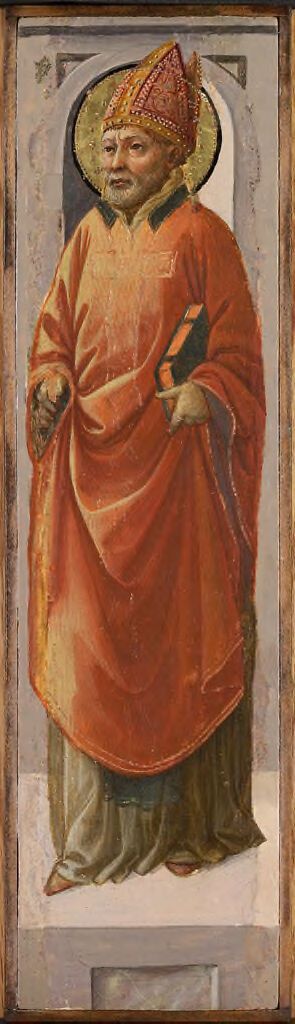
More Religious Art
Browse all →
The Return of the Prodigal Son
Rembrandt van Rijn

The Garden of Earthly Delights
El Bosco

Count Orgaz’ funeral
El Greco

The Hundred Guilder Print: the central piece with Christ preaching, the plate arched
Rembrandt van Rijn

The Descent from the Cross
Rogier van der Weyden

The return of the prodigal son
Rembrandt van Rijn