
Saint Paul at Lystra — History & Facts
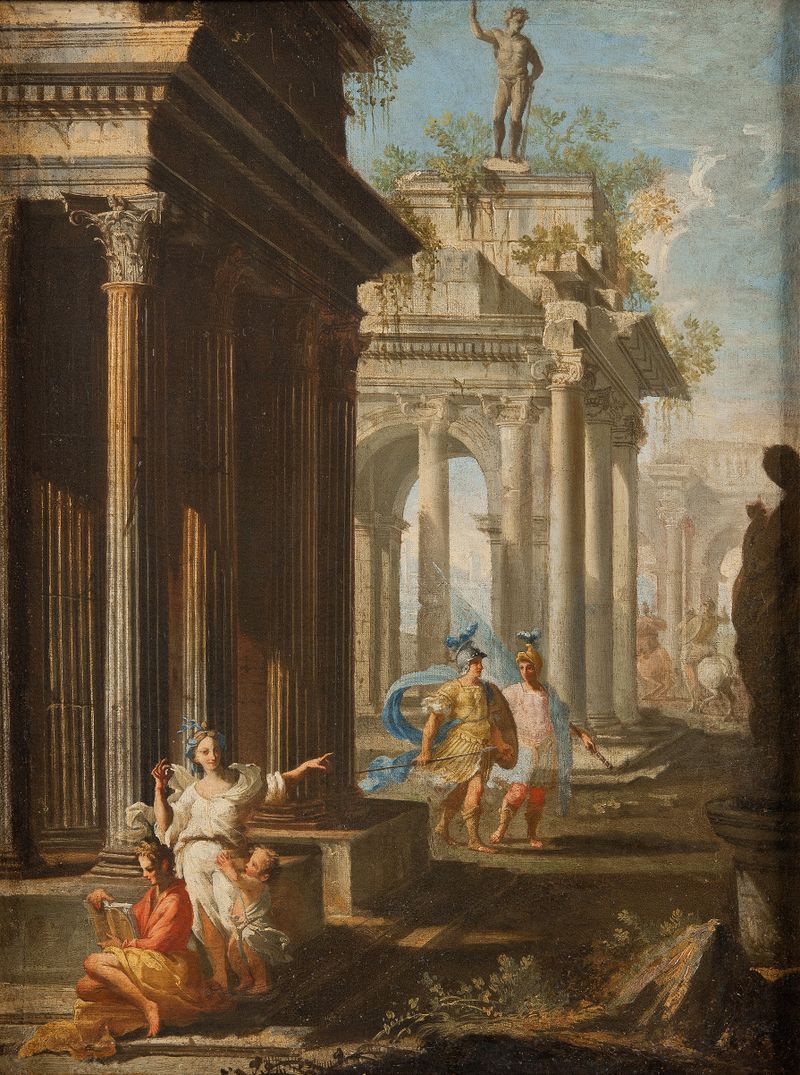
In the hushed atmosphere of Saint Paul at Lystra, melancholy whispers through each brushstroke, demanding reflection on faith and human connection. Look to the left at the figure of Saint Paul; his outstretched arm seems to beckon both the onlookers and the divine. The somber palette of browns and grays envelops the scene, instilling a sense of gravity that accentuates the weight of his message. Notice how the light falls delicately upon his face, illuminating the deep lines carved by a life of trials, while shadows gather around the crowd, hinting at their uncertainty and skepticism.
The composition, with figures arranged in a semi-circle, draws the eye into this pivotal moment, creating an intimate space for contemplation. The emotional tensions within this work unfold through the contrasting expressions of the figures present. Some faces reflect deep reverence, while others bear a skeptical frown, encapsulating the struggle between belief and doubt. The distant mountains, painted in muted shades, serve as a metaphor for the obstacles of faith, echoing the internal battles faced by each individual witness.
This dynamic interplay between light and shadow invites viewers to ponder their own spiritual journeys, where silence often speaks louder than words. Alberto Carlieri painted Saint Paul at Lystra during a time when Baroque art was evolving, marked by a blend of realism and emotional depth. Although the exact date remains unknown, Carlieri's works often emerged in dialogue with the changing currents of 18th-century Italian art, reflecting both religious themes and personal introspection. His focus on emotion and the human experience aligns with the broader artistic movement aiming to connect deeply with the audience's psyche.
More Artworks by Alberto Carlieri
Browse all →
More Religious Art
Browse all →
The Return of the Prodigal Son
Rembrandt van Rijn

The Garden of Earthly Delights
El Bosco

Count Orgaz’ funeral
El Greco

The Hundred Guilder Print: the central piece with Christ preaching, the plate arched
Rembrandt van Rijn

The Descent from the Cross
Rogier van der Weyden

The return of the prodigal son
Rembrandt van Rijn