
Classical Buildings with Columns I — History & Facts
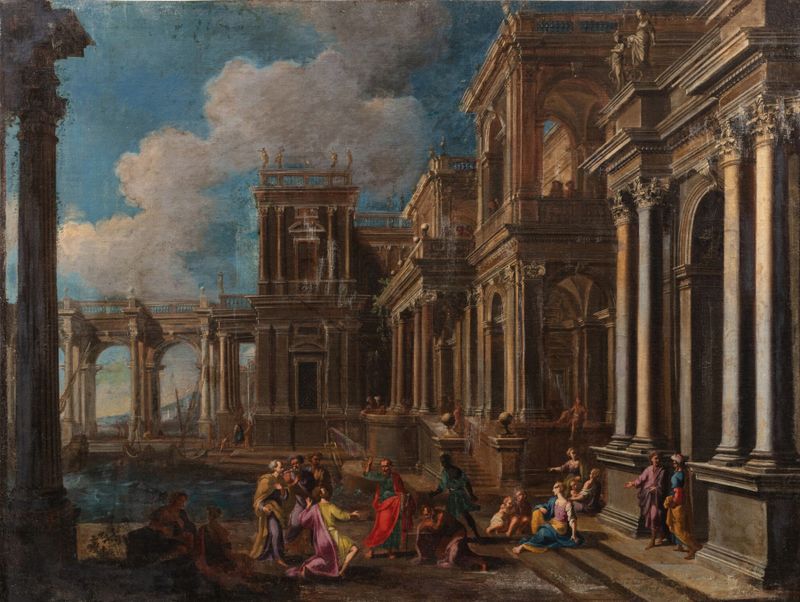
In the stillness of architectural beauty, there lies an undercurrent of dread, a silent whisper of fear that echoes within the columns and corridors of the past. Look to the left at the majestic columns, their meticulously carved details standing tall and unwavering, yet possessing an eerie fragility. Notice how the interplay of light and shadow dances across the stone, revealing textures that provoke both admiration and trepidation. The cool palette of muted grays and greens envelops the scene, creating an atmosphere that is both somber and reflective, as if the weight of history is pressing down on the viewer. Amidst the grandeur, small details beckon deeper contemplation.
Observe how the stark contrast between the robust columns and the delicate embellishments at their base evokes a tension between strength and vulnerability. There’s a palpable sense of isolation, as if these structures were guardians of secrets long forgotten, instilling a fear of the passage of time and the inevitable decay that shadows even the most resplendent creations. Alberto Carlieri painted this work during an era when the neoclassical revival was shaping artistic discourse, likely in the late 18th century or early 19th century. Living in a world grappling with the aftermath of the Enlightenment, he sought to bridge the past with the ideals of his time, illustrating both the enduring nature of classical architecture and the haunting fear of obsolescence that accompanies it.
More Artworks by Alberto Carlieri
Browse all →
More Architecture Art
Browse all →
The statue of Liberty
Frédéric Auguste Bartholdi

View of Houses in Delft, Known as ‘The Little Street’
Johannes Vermeer

View of Houses in Delft, Known as ‘The Little Street’
Johannes Vermeer

The Cathedral in Rouen. The portal, Grey Weather
Claude Monet

The yellow house
Vincent van Gogh

The Church in Auvers-sur-Oise, View from the Chevet
Vincent van Gogh