
Saint Salvi Church, Albi — History & Facts
Can beauty exist without sorrow? Within the stillness of Saint Salvi Church, Albi, a haunting silence envelops the viewer, inviting reflection and introspection. The architectural elegance stands resolute, embodying both grace and the weight of unspoken histories, where light and shadow dance in a delicate balance. Look closely at the intricate details framing the entrance, where the soft hues of ochre and muted blues invite your eye. Notice how the warm sunlight spills through the arched windows, illuminating the stone carvings that seem to whisper tales of devotion and time.
The gentle play of light enhances the church's ethereal quality, guiding your gaze up toward the soaring spires that punctuate the tranquil sky. Each brushstroke reveals Poirot's masterful command of texture, imbuing the painting with a tactile warmth, despite its subject's solemnity. Beneath the surface, a tension emerges—the juxtaposition of serenity and desolation. The church, a symbol of faith, stands as a relic of the past, evoking a sense of loss while also embodying resilience.
The play of light signifies hope, yet the muted colors remind us of the quiet sorrow that often accompanies beauty. This duality resonates, urging viewers to contemplate their own emotions as they engage with the scene. Between 1830 and 1840, Poirot created this work while deeply immersed in the Romantic movement, which emphasized individual emotion and the sublime qualities of nature and architecture. Living in a time of social and political upheaval, he found inspiration in the profound connections between humanity, faith, and the places we build to house these sentiments.
As the world around him shifted, his art reflected not just the structures but the silent stories they held within.
More Artworks by Pierre Achille Poirot
Browse all →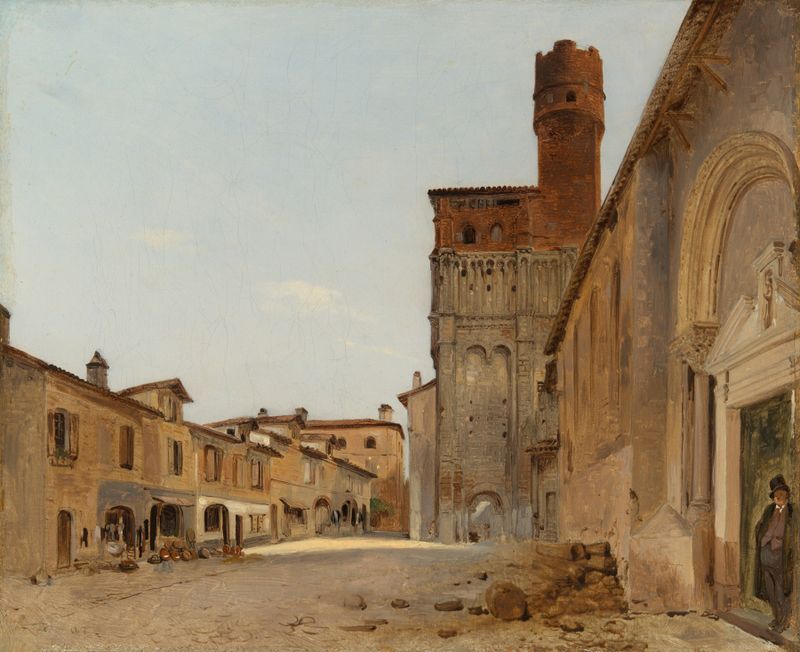
More Architecture Art
Browse all →
The statue of Liberty
Frédéric Auguste Bartholdi

View of Houses in Delft, Known as ‘The Little Street’
Johannes Vermeer

View of Houses in Delft, Known as ‘The Little Street’
Johannes Vermeer

The Cathedral in Rouen. The portal, Grey Weather
Claude Monet

The yellow house
Vincent van Gogh

The Church in Auvers-sur-Oise, View from the Chevet
Vincent van Gogh