Salzburg — History & Facts
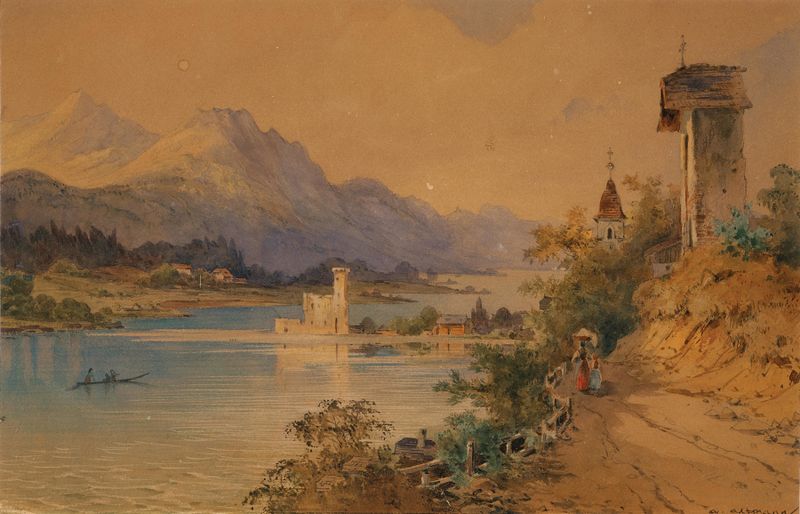
In the quiet spaces of existence, mortality whispers its truths, urging us to confront the fragile beauty of life. Focus on the sweeping landscape that unfolds before you, drawing the eye to the majestic peaks of the Alps, their snow-dusted summits piercing the sky. A gentle palette of muted greens and soft grays invites contemplation as the tranquil river winds through the valley, reflecting the ethereal light of the midday sun. Notice how the delicate brushstrokes evoke a sense of stillness, capturing the fleeting moment when nature and human architecture coexist in harmony. Yet beneath this serene tableau lies an undercurrent of poignant awareness.
The distant spires of Salzburg, framed by the looming mountains, suggest both the permanence of the landscape and the transience of human life. The way the houses nestle against the hills, so small against the grandeur of nature, speaks to our vulnerability. Each element represents a fleeting chapter in the endless story of existence, encapsulating a longing that transcends time. Painted in 1855, this work emerged during a period when Anton Altmann the younger was grappling with the profound shifts of the post-Romantic era.
Living in Austria, he sought to capture the essence of his homeland while reflecting on the broader themes of identity and mortality. This painting not only showcases his technical prowess but also serves as a meditation on the delicate balance between life and the inevitable silence that follows.