Sandhills — History & Facts
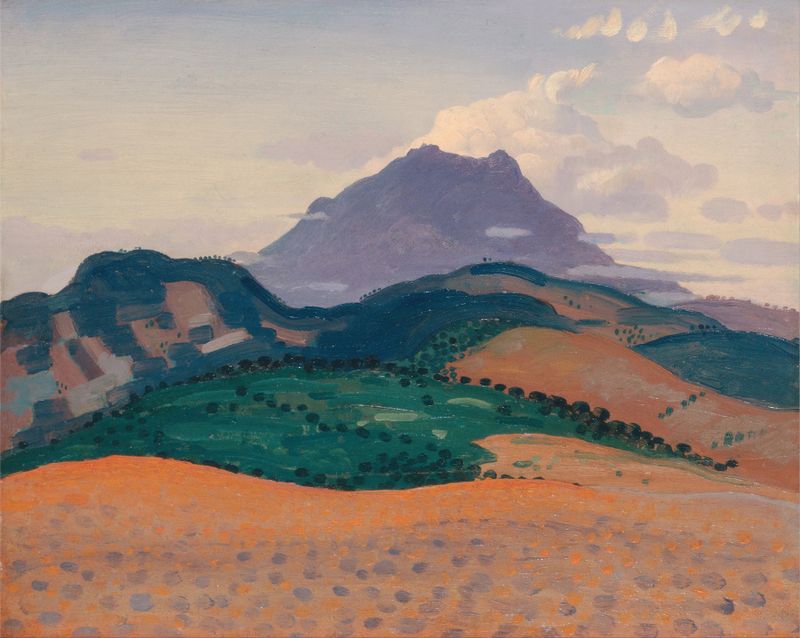
In stillness, it holds desires unfulfilled and dreams yet to be realized, inviting us to linger in its embrace. Look to the center of Sandhills, where gentle undulations of the landscape cradle the horizon, drawing your gaze toward the soft, muted hues of ochre and green. The painting structures itself around undulating hills that rise and fall like breaths, their texture rendered with delicate brushstrokes that evoke both serenity and longing. Notice how the light subtly dapples across the canvas, illuminating patches of grass and casting soft shadows that suggest the approach of twilight, a time of transition that resonates with the pulse of desire. Yet, amidst this calm, an emotional tension resides.
The pathways etched into the earth seem to beckon, hinting at journeys not taken, while the sparse vegetation stands as a metaphor for yearning—the desire for growth in an otherwise barren landscape. Each stroke conveys a silent narrative, a story of unexpressed aspirations and the inherent beauty found in waiting. The stillness of the scene underscores a deeper longing, evoking a sense of nostalgia for moments that slip through our fingers like grains of sand. Created in 1913, Sandhills reflects Derwent Lees' evolution as an artist navigating the tumultuous waters of early 20th-century art.
Living and working in Australia during this period, he was influenced by both the Impressionist movement and the burgeoning Modernist style. With the world on the brink of change, this piece embodies a quiet moment of contemplation amidst a rapidly evolving landscape, both in art and life.