
Sanssouci Palace in Potsdam — History & Facts
Within the tranquil walls of a grand palace, echoes of forgotten laughter wrap around empty corridors, whispering tales of solitude. The architecture stands proud yet eerily still, as if guarding the secrets of those who once roamed its opulent halls. Focus on the delicate interplay of light and shadow that bathes the palace facade, revealing the meticulous brushwork of the artist. Notice how the muted colors evoke a sense of nostalgia, drawing the eye toward the ornate details etched into the stone.
The composition, with its sweeping arches and looming columns, captures a majestic yet haunting stillness, inviting a deeper contemplation of the spaces in between. Beneath the grandeur lies a poignant exploration of loneliness, captured in the melancholic beauty of the scene. The absence of human figures amplifies the feelings of isolation, while the meticulously rendered gardens surrounding the palace suggest life that once thrived but now feels distant. Each element, from the intricate statues to the overgrown paths, signifies the passage of time and the lingering memories lost in solitude. In 1921, as Sanssouci Palace in Potsdam came to life under Fritz Rhein's brush, Europe was grappling with the aftermath of World War I.
The artist, navigating the evolving landscape of art and society, sought to capture the complex emotions of his time. Amidst the shifting currents of modernism, Rhein's work reflects both a personal and collective yearning for beauty, peace, and understanding in a world marked by upheaval.
More Artworks by Fritz Rhein
Browse all →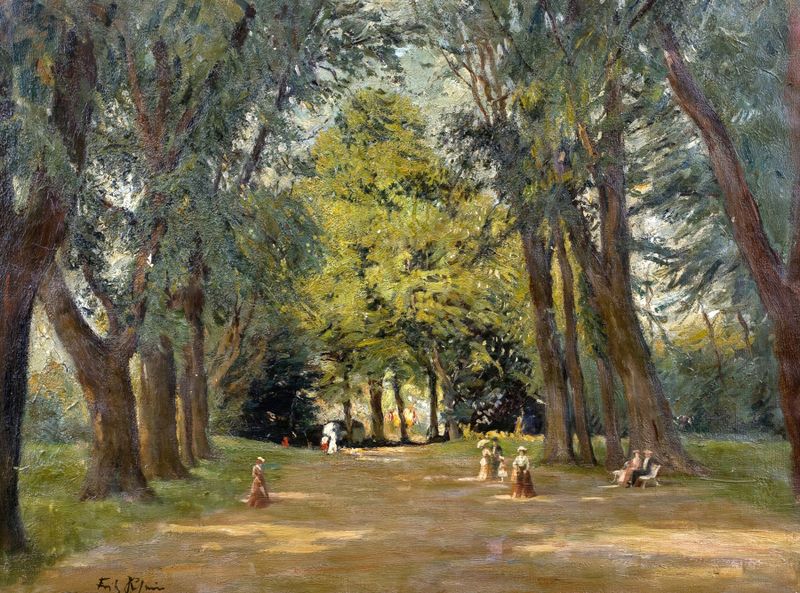
More Architecture Art
Browse all →
The statue of Liberty
Frédéric Auguste Bartholdi

View of Houses in Delft, Known as ‘The Little Street’
Johannes Vermeer

View of Houses in Delft, Known as ‘The Little Street’
Johannes Vermeer

The Cathedral in Rouen. The portal, Grey Weather
Claude Monet

The yellow house
Vincent van Gogh

The Church in Auvers-sur-Oise, View from the Chevet
Vincent van Gogh