Scene in Berkshire County, Massachusetts — History & Facts
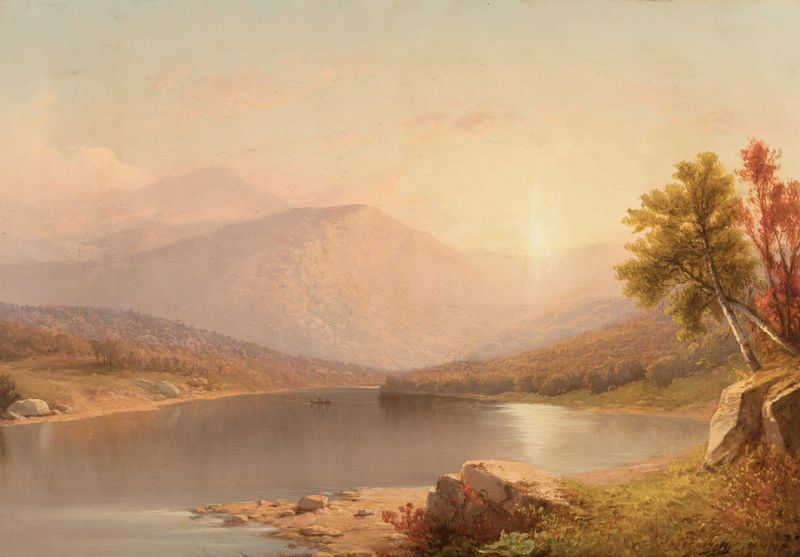
Can beauty exist without sorrow? In Scene in Berkshire County, Massachusetts, the delicate balance of nature begs this question, inviting viewers to explore the interplay of transformation in both landscape and emotion. Look to the foreground, where vibrant greens of lush grass blend seamlessly with the earth, hinting at the life that flourishes beneath. Notice how the gentle brushstrokes create a rolling texture, leading your eye upward to the rich tapestry of foliage. The interplay of light and shadow casts a dreamlike quality over the scene, illuminating the peaks of the distant mountains in soft pastel hues that evoke a sense of fleeting serenity.
Each detail, from the glimmering water to the wisps of clouds, draws you deeper into a world that feels both immediate and timeless. Yet there exists a tension within this idyllic portrayal. The bright colors of the sunlit landscape contrast sharply with the shadowy crevices, suggesting an underlying struggle between joy and melancholy. The harmony of nature is punctuated by a sense of impermanence, reminding us that every beautiful moment is tinged with the inevitability of change.
Williamson captures this duality, inviting viewers to reflect on their own experiences of transformation, where beauty often intertwines with loss. Created in 1880, during a time when American artists were increasingly exploring the natural world, this work reflects the artist's dedication to capturing the essence of his surroundings. Working in the Berkshires, Williamson was influenced by the burgeoning landscape movement, which emphasized a deep appreciation for the American countryside. This painting not only marks a pivotal point in his career but also resonates with a broader cultural shift towards celebrating the beauty of the natural environment amidst the encroachment of industrialization.