Scene near Bettws-y-coed — History & Facts
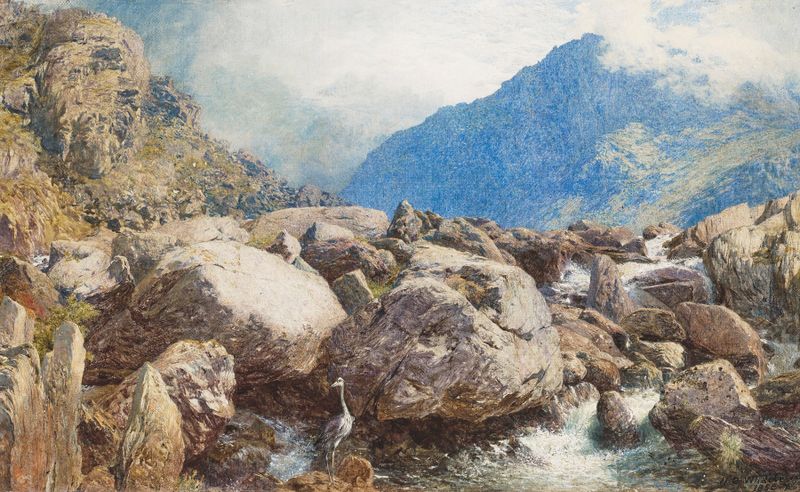
Is this a mirror — or a memory? In Scene near Bettws-y-coed, the interplay of light and shadow invites the viewer into a world that straddles the line between reality and reflection. Look to the foreground, where a shimmering stream captures the soft, dappled light filtering through the trees. The delicate brushstrokes create a rhythmic dance across the water's surface, suggesting movement and life. Notice how the lush greens of the foliage contrast with the deep blues and grays of the sky, a palette that evokes both tranquility and a sense of foreboding, as if nature holds its breath in suspended anticipation. Hidden within this serene landscape are emotional tensions marked by the juxtaposition of light and shadow.
The play of sunlight hints at warmth and comfort, while the encroaching shadows whisper of uncertainty and the unknown. The distant mountains loom, their dark silhouettes a reminder of the challenges that lie beyond the lush tranquility, suggesting a deeper narrative of struggle against the backdrop of nature's indifferent beauty. Henry Clarence Whaite created this evocative scene in 1862, during a time when the Pre-Raphaelite movement was influencing artists to embrace nature's raw splendor. Captured in the picturesque village of Bettws-y-coed, Whaite sought to convey the emotive power of the Welsh landscape, reflecting a personal connection to his surroundings while engaging with the broader artistic dialogues of his era.