Scheiblahn mit Zirben — History & Facts
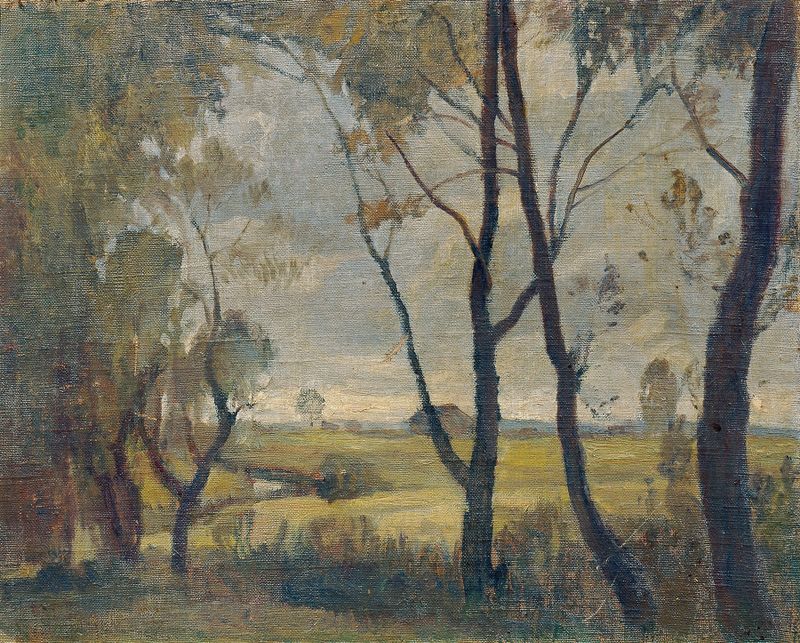
Is this a mirror — or a memory? In Scheiblahn mit Zirben, destiny unfurls itself amidst the intertwining of nature and human experience, as reflections echo the past and future in every brushstroke. Look to the left at the delicate play of light filtering through the pine branches, casting dappled shadows on the ground below. The artist employs a rich palette of greens and browns, harmonizing the vibrancy of the trees with the muted tones of the earth. The composition invites your gaze to wander along the curving path, suggesting a journey rather than a destination, drawing the viewer deeper into this serene woodland setting. Beneath the calm surface lies a juxtaposition of solitude and interconnectedness.
The uneven texture of the tree bark highlights the passage of time, while the gentle curves of the pathway symbolize life's unpredictable turns. Each element seems to whisper the stories of those who have walked this way before, creating an intimate bond between the observer and the artwork. The scene speaks to the inevitability of change, where every moment leads to another, threading the fabric of existence together. In 1905, Alois Penz found himself in a world transitioning towards modernity, grappling with the loss of traditional values in art.
Living in Austria, he was influenced by the emerging Jugendstil movement, which emphasized the beauty of nature and organic forms. This work, painted during a time of personal and artistic exploration, reflects his desire to capture fleeting moments in nature, intertwining them with the emotional weight of human experience.