
Schneelandschaft — History & Facts
Could a single brushstroke hold eternity? In the delicate panorama of winter, the canvas breathes a truth that resonates far beyond its quiet landscape. Look to the left at the delicate brushwork that captures the snow-laden trees, their branches heavy with the weight of winter. Notice how the cool blues and whites blend seamlessly, evoking a sense of calm and stillness. The soft brushstrokes create a texture that invites the viewer to imagine the crisp air and the muffled sounds of a snowy day.
As your gaze wanders across the painting, the gentle play of light upon the snow reveals the artist's keen understanding of nature's subtleties. Beneath its serene surface, the painting conveys a deeper emotional tension—the juxtaposition of stillness and the inevitability of change. The untouched snow symbolizes a moment frozen in time, yet the soft shadows hint at the passage of fleeting hours. The distant mountains, shrouded in a pale mist, suggest an unseen world beyond the immediate, provoking thoughts of both isolation and solace.
Every stroke carries a weight of truth, inviting contemplation on the fleeting nature of beauty. In 1852, while creating this work, the artist was influenced by the Romantic movement, which sought to connect deeply with nature and emotion. Fiedler painted Schneelandschaft amidst a burgeoning appreciation for landscape art in Europe, reflecting a society increasingly drawn to nature's quiet majesty. His engagement with the natural world during this period solidified his reputation, as he meticulously captured scenes that resonate with viewers' innermost feelings.
More Artworks by Bernhard Fiedler
Browse all →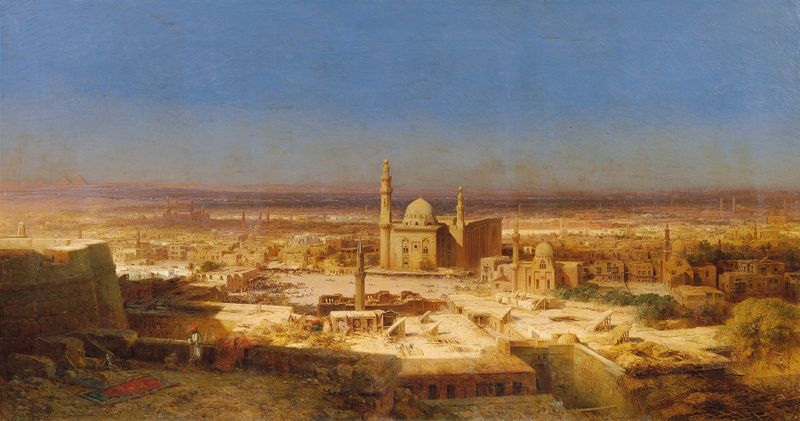
Ansicht von Kairo
Bernhard Fiedler
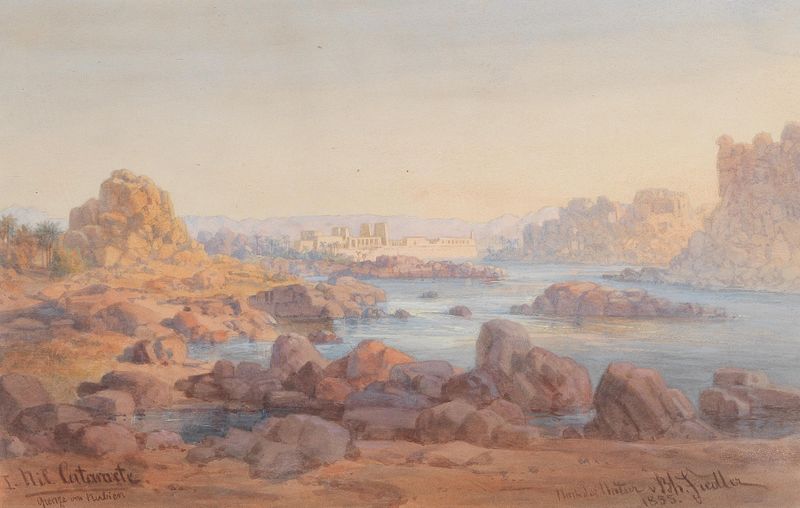
Nil Cataracte, Grenze von Nubien
Bernhard Fiedler
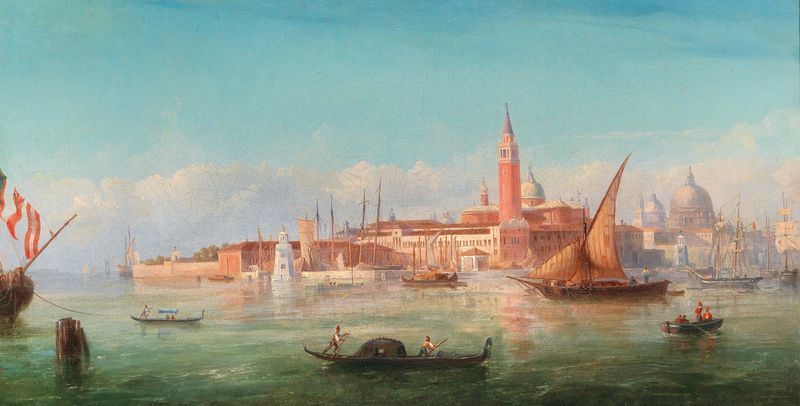
A View Of Venice
Bernhard Fiedler
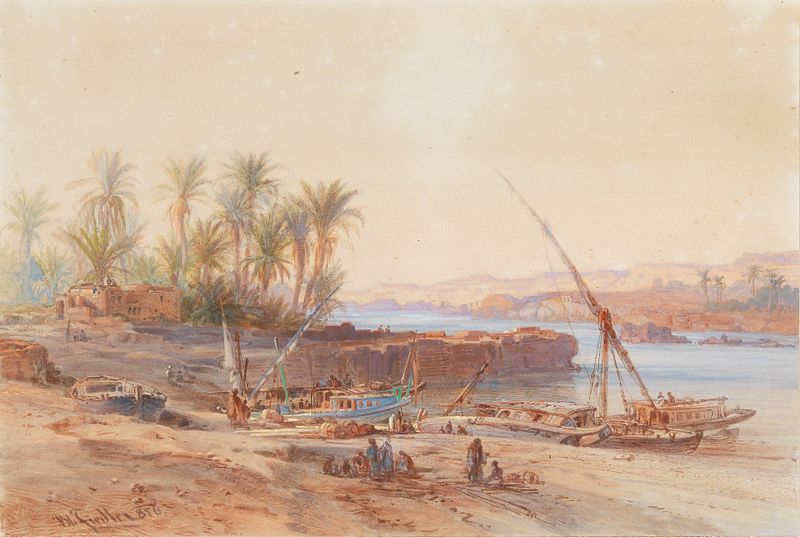
Riverboats On The Nile
Bernhard Fiedler

View into the Bay of Trieste from S. Servolo
Bernhard Fiedler

Bei Assuan
Bernhard Fiedler

A Scene From Egypt
Bernhard Fiedler

Kloster in Bethlehem
Bernhard Fiedler





