
Schnitter — History & Facts
In the heart of melancholy lies a canvas where every stroke whispers the stories of fleeting moments, lost yet enduring. Look to the center of the canvas, where a solitary figure stands, poised with a scythe amidst a field of golden grain. The muted earth tones of the landscape contrast sharply with the vibrant hues of the sky, where dusk lingers like a sigh. Notice how the gentle play of light casts elongated shadows, emphasizing the figure's isolation while inviting the viewer to ponder the life cycle being harvested.
Each brushstroke captures a transition between day and night, life and death, drawing us into a profound stillness. Delve deeper into the details: the expression on the figure's face is neither sorrowful nor joyful, but rather contemplative, embodying the weight of labor and time. The surrounding grains stand tall yet fragile, symbolizing the resilience of nature against the inevitable decay that follows. Perhaps the scythe itself serves as a reminder of mortality, a tool of both creation and destruction, hinting at the complex relationship between humanity and the earth that sustains it. In 1908, the artist was navigating the nuanced currents of expressionism, reflecting on the existential themes of his time.
Living and painting in Europe, Simony focused on the interplay between light and emotion, grounding his work in the realities of life while also reaching towards the transcendental. This piece encapsulates a moment of introspection during a period rich with change, inviting viewers to engage with the melancholy of existence itself.
More Artworks by Stefan Simony
Browse all →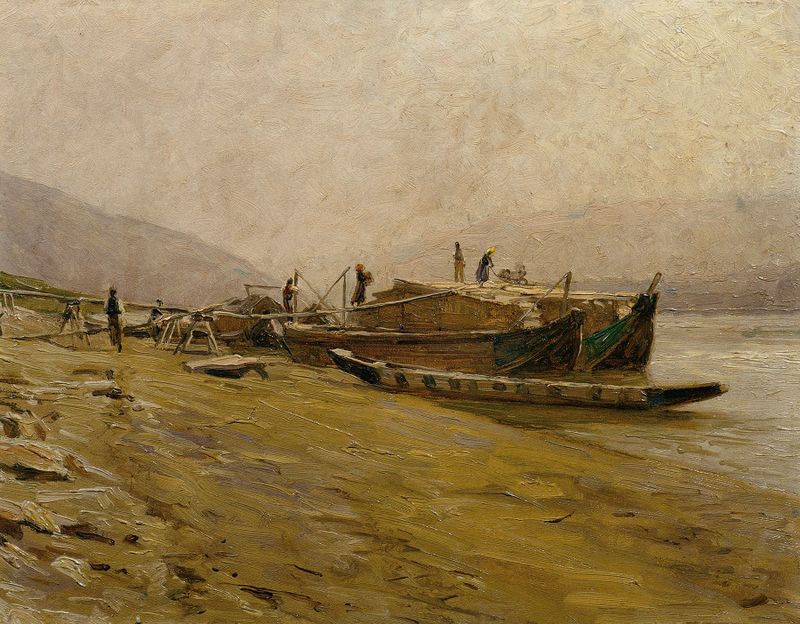
Donauschleppschiffe bei Spitz
Stefan Simony

Aus Weissenkirchen in der Wachau
Stefan Simony

Gradeser Frauen
Stefan Simony

Shell Collectors in the Lagoon
Stefan Simony
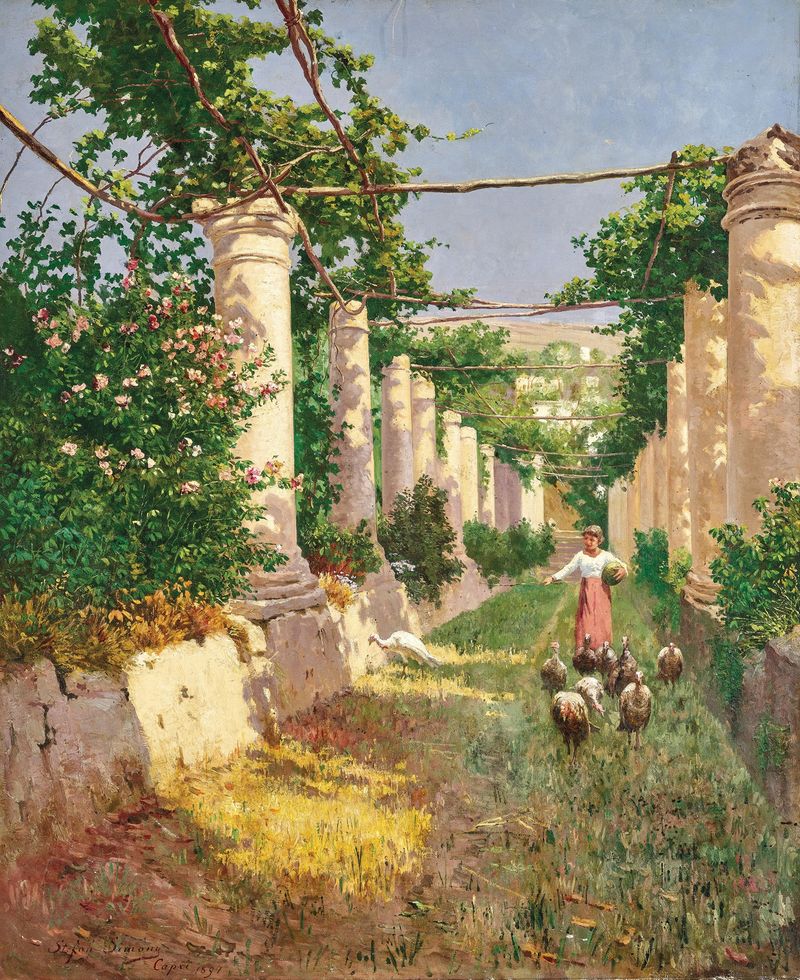
A young girl feeding turkeys in a sunlit pergola in Capri
Stefan Simony
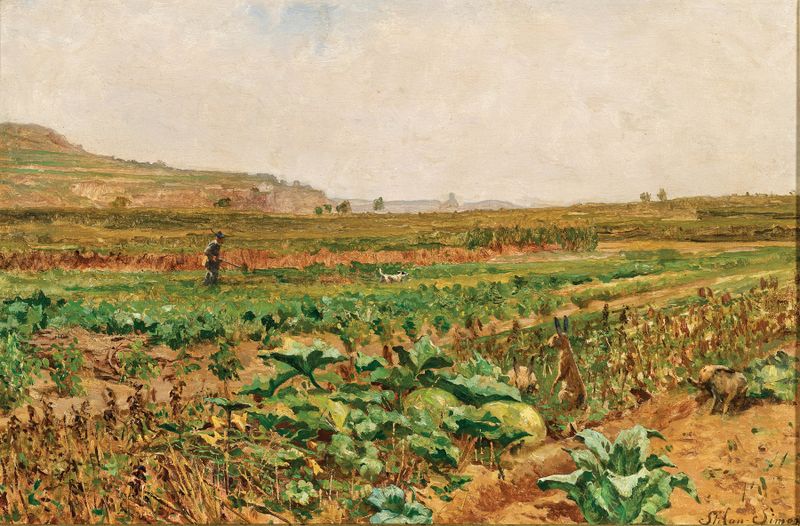
A Vegetable Field with a Hare and a Hunter in the Background
Stefan Simony
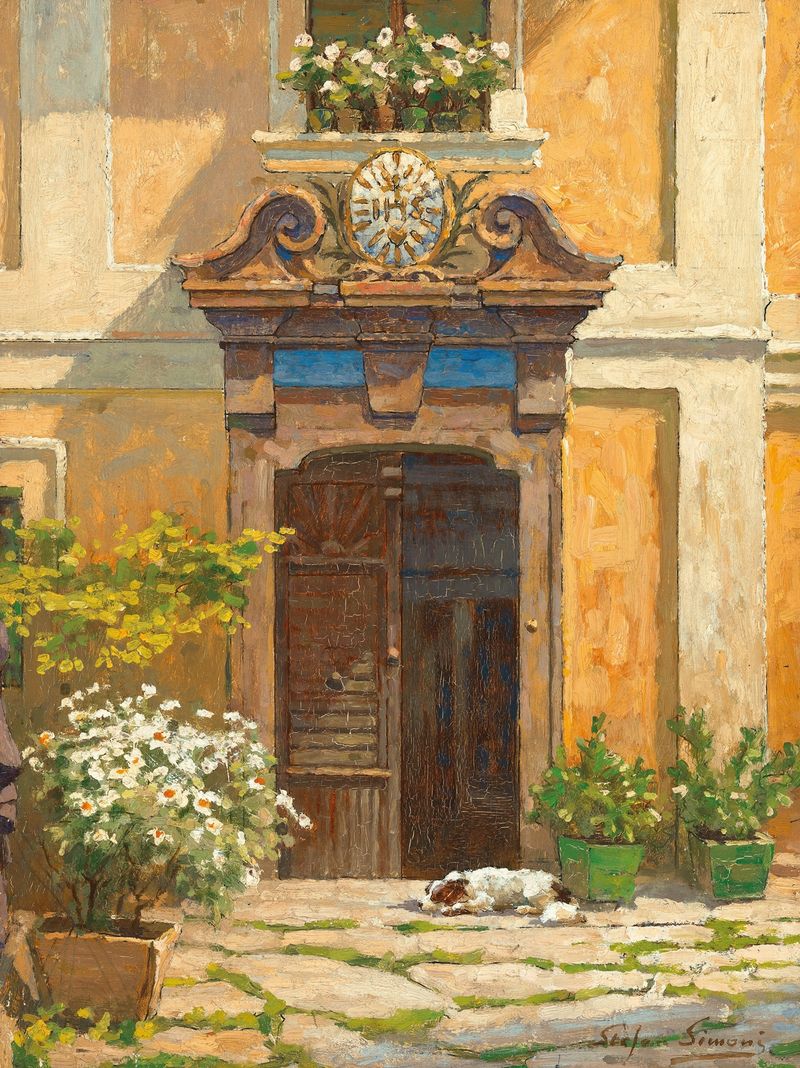
Barockes Haustor in Spitz
Stefan Simony





