Scholar Playing a Qin 弹琴折扇 — History & Facts
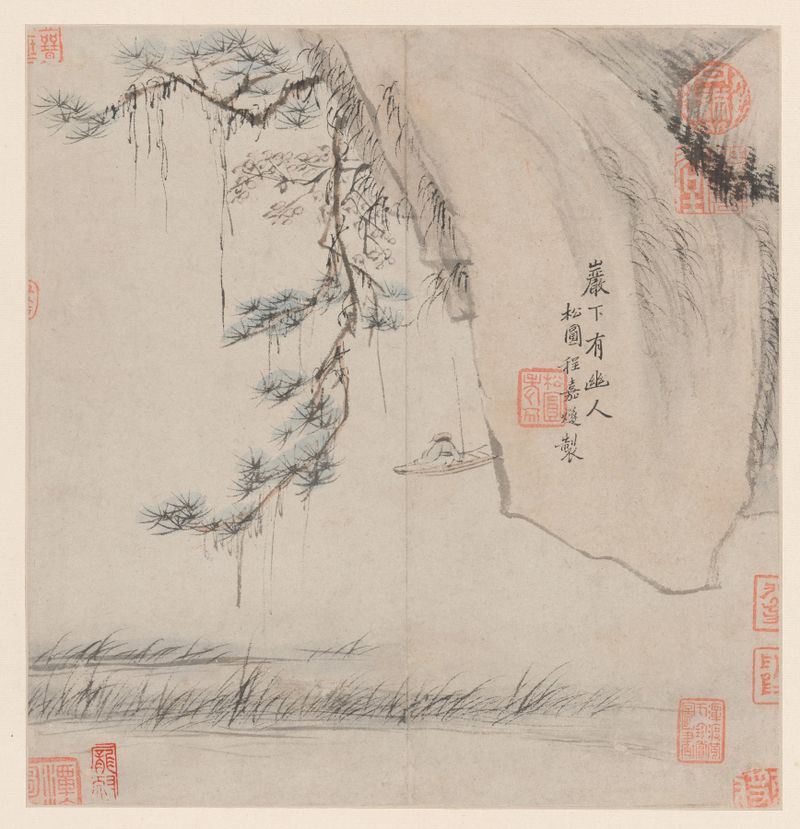
Can beauty exist without sorrow? In the delicate tension of solitude, the answer may be found. Focus on the figure seated in serene contemplation, his poised fingers gently pressing the strings of the qin. The soft, muted colors of the painting evoke a sense of tranquility, with warm earth tones enveloping the scholar. Notice how the light spills softly across the instrument, highlighting its finely crafted surface, while the scholar’s expression carries a weight of introspection, revealing a deep connection to his music and his solitude.
The subtle balance of the composition draws your gaze to this moment, as if time itself has paused to listen. Yet, it’s the elements of the painting that speak of deeper themes, intertwining beauty and loneliness. The contrast between the scholar’s serene posture and the empty space surrounding him underscores a poignant isolation. The delicate folds of the fan resting beside him whisper of companionship lost, while the quietude of his surroundings amplifies the intimate struggle between artistry and longing.
Each element, from the intricate textures of his robes to the melancholic notes of the qin, echoes the silent narrative of a man who finds solace only through the music that feels both alive and isolating. Created in 1632 during a period of transforming artistic expression in China, the scholar resonates with the intellectual environment of the time. Cheng Jiasui, amidst a flourishing of literati culture, depicted moments that transcend mere visual representation, capturing the essence of human experience. This painting reflects his engagement with themes of solitude and introspection, drawing from both personal experience and the wider philosophical currents of his era.