Scène tonkinoise (Tonkinese Scene) — History & Facts
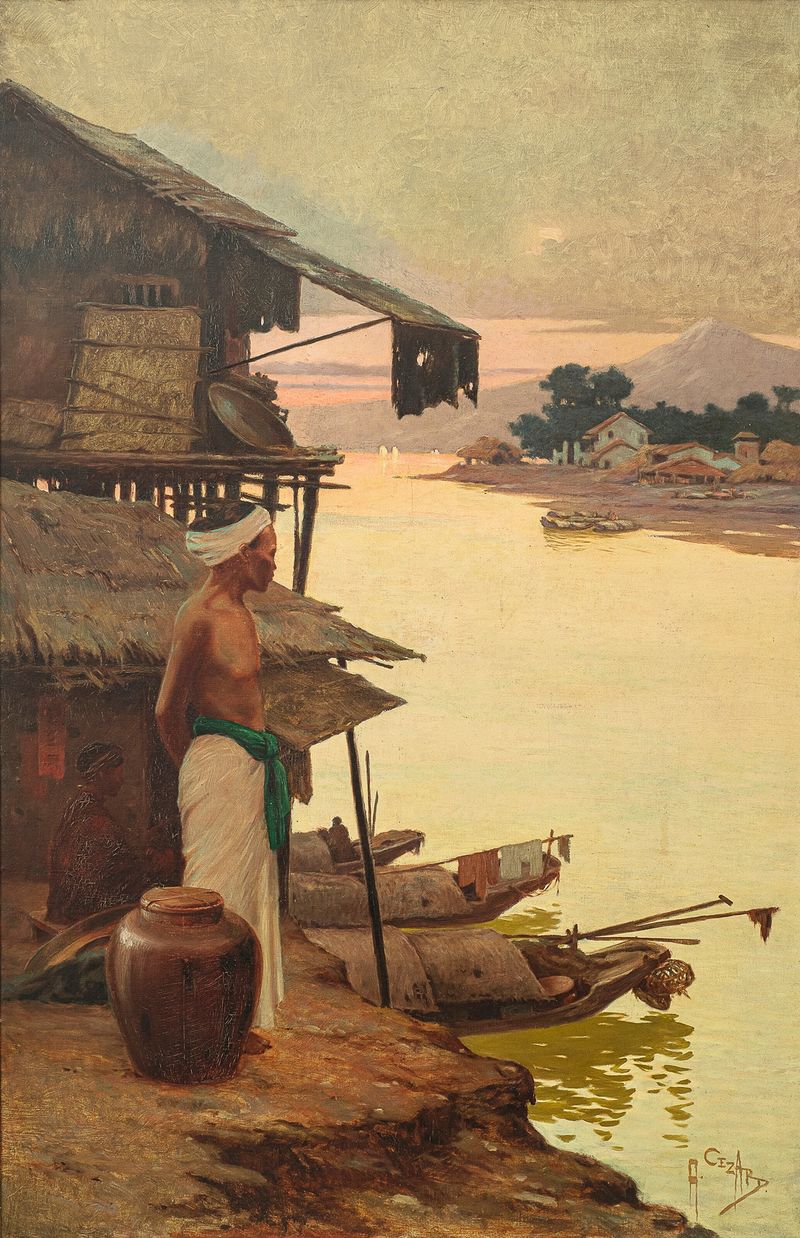
Did the painter know this moment would outlive them? In a world fraught with change, the yearning for a connection to fleeting beauty resonates across time, captured within the strokes of an artist's brush. Look to the center of Scène tonkinoise where vibrant greens and blues dance together, creating a lush depiction of a tropical landscape that feels both intimate and expansive. Notice how the sunlight filters through the foliage, casting playful shadows that evoke a sense of warmth and tranquility. The arrangement of figures — a woman with a gentle smile and a child at her side — draws the eye first, their serene expressions embodying a quiet joy amidst the verdant setting.
The use of color and light emphasizes not just the physical attributes of the scene but also an emotional landscape inviting the viewer to linger. Upon closer inspection, the contrasting elements of the scene emerge: the calmness of the figures juxtaposed with the vibrant movement of nature around them suggests a deeper narrative of connection and belonging. The intricate details in the fabric of their clothing whisper of culture and tradition, while the lushness of the greenery speaks to nature’s abundance. This balance of stillness and life hints at a yearning for simplicity, a longing to pause time, and savor moments that often slip away unnoticed. In 1902, while living in France, Cézard created this work during a period of artistic exploration and growing interest in exoticism, inspired by the rich cultures he encountered.
The world was on the cusp of modernization, yet he found solace in the beauty of everyday life, translating that into this serene scene. The painting captures not just a fleeting moment but also the artist's desire to connect deeper with the essence of life itself.