Scogliera — History & Facts
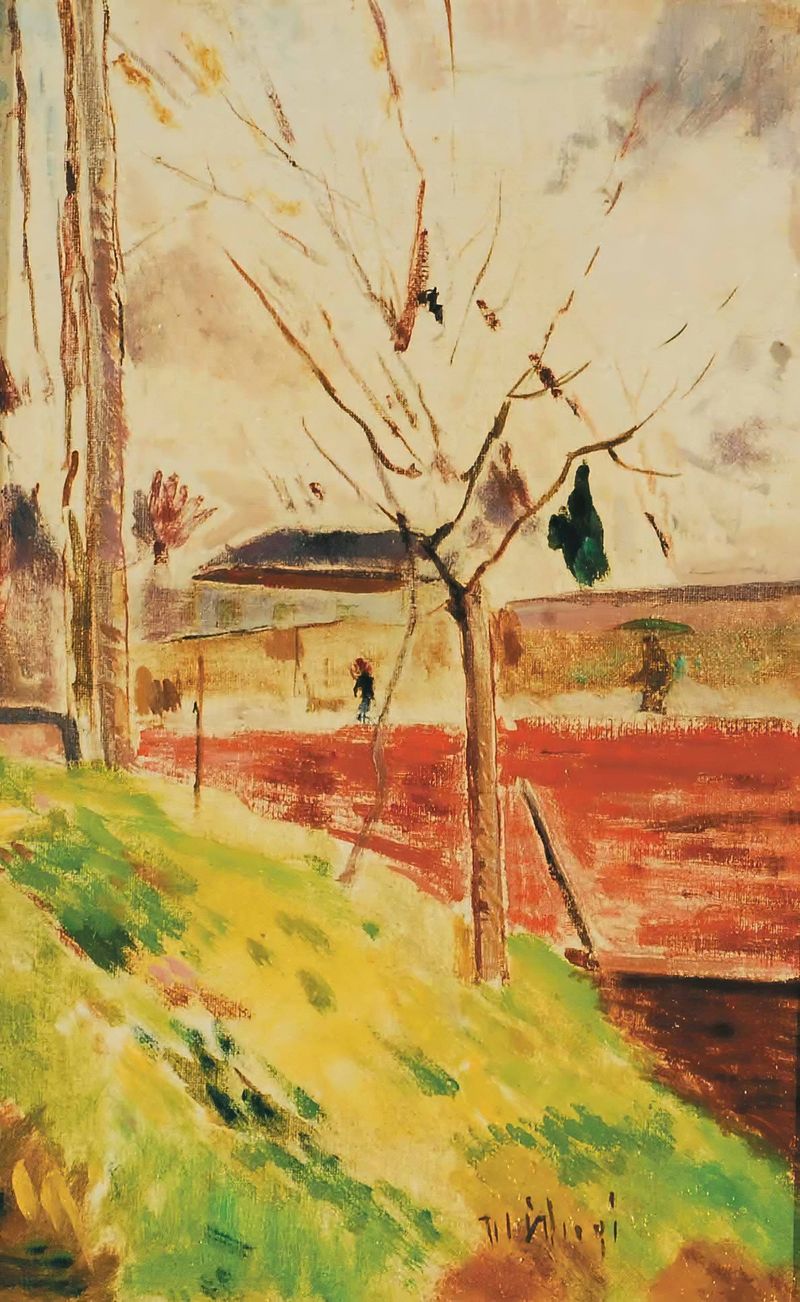
When did color learn to lie? The vibrant hues of the landscape can mask profound sorrow, creating an emotional dissonance that lingers long after the initial gaze. Look to the left at the swirling blues and greens that evoke the sea, contrasting sharply with the jagged cliffs that rise ominously. The artist employs dynamic brushstrokes, blending tones to conjure an otherworldly quality, while the warm palette of the sunlit sky suggests fleeting warmth amidst the inherent turmoil. Shadows dance across the canvas, suggesting both depth and isolation, inviting viewers to explore the nuances of this complex scene. Within the tumultuous waves and rugged terrain lies a narrative of loss, where the beauty of nature becomes a veil for deeper emotions.
The interplay of light and shadow hints at the duality of existence—joy intertwined with despair, as the sea’s relentless embrace contrasts with the stark permanence of the cliffs. Each stroke seems to speak of fleeting moments, echoing the inevitability of change and the transient nature of life. Ulvi Liegi painted Scogliera during a period marked by personal upheaval and introspection. The work reflects a time when he grappled with the shifting tides of his own experiences, exploring themes of isolation and resilience.
The art world was entering a phase of modernism, yet Liegi retained a connection to traditional techniques, merging them with his emotional insights to create a work that vibrates with raw authenticity.