Südliche Straßenszene — History & Facts
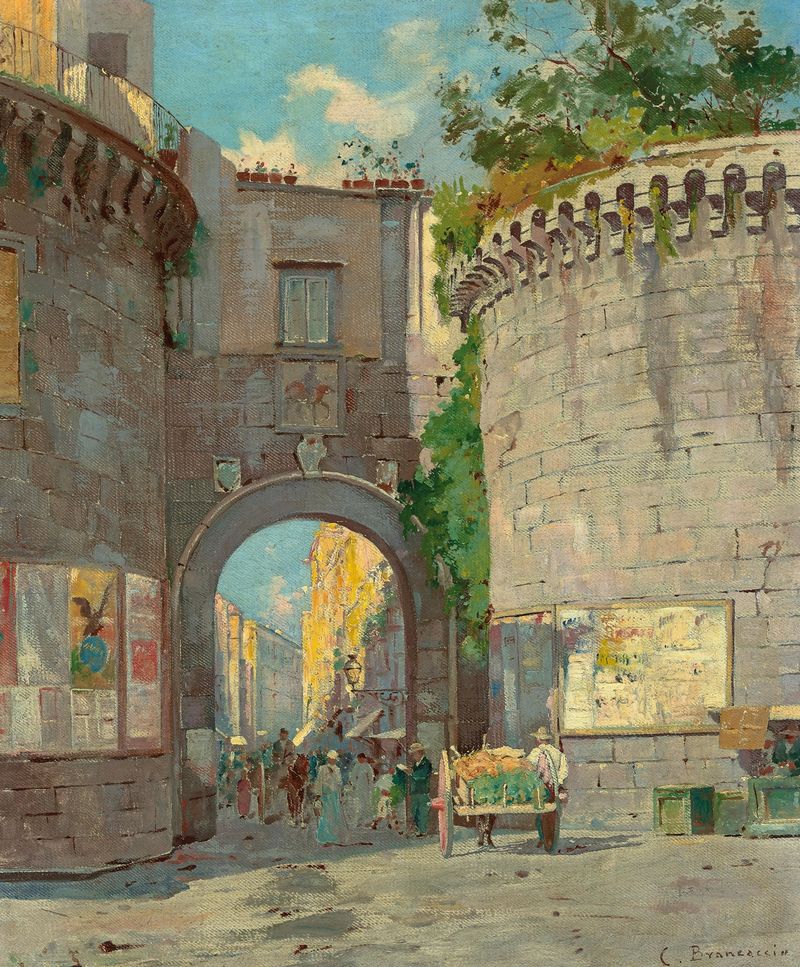
Each brushstroke serves as a testament to the hope nestled within its colors, a whisper of possibility amidst the mundane. Focus on the lower left corner, where the warm, golden hues of sunlight spill onto the cobblestone streets, evoking a sense of nostalgia for a world just beyond reach. The sweeping curves of the road draw the eye upward, inviting exploration of the bustling market scene above. Notice how people in the painting subtly interact; their gestures, whether a wave or a shared conversation, embody a fleeting yet profound connection in everyday life. In this work, tension arises between the stillness of the buildings and the lively movement of the figures, suggesting that hope exists even amid the routine.
The contrast of shadow and light symbolizes the duality of existence — moments of darkness contrasted by the brightness of community interactions. The blending of colors reveals a rich tapestry of life experiences, each character representing a fragment of the collective yearning for a brighter future. Carlo Brancaccio created this piece in an era steeped in transition, moving through the vibrant streets of early 20th century Europe. Amidst the rise of modernism, he sought to capture the essence of daily life, focusing on the interplay between light and atmosphere while the world around him was rapidly changing.
In this context, the work becomes not just a depiction of a scene but a celebration of hope and human connection during uncertain times.