
Self-portrait in a fur cap: bust — History & Facts
What secret hides in the quiet of the canvas? A yearning gaze meets the viewer, a silent invitation to explore the depths of desire rarely articulated yet palpably felt. Look to the center, where the figure gazes outward, his thoughtful expression rendered with delicate brushwork and subtle yet rich tones. Notice how the soft lighting defines the contours of his fur cap, creating a striking contrast against the smoother texture of his skin. The muted palette imbues the work with a sense of introspection, drawing your eye to the intricate details of his attire and the confident posture that belies a hidden vulnerability. The interplay of light and shadow adds layers to the emotional narrative; the softness of the fur suggests warmth and comfort, while the directness of his stare suggests an inner conflict, a longing for something unattainable.
A small detail, like the slight tilt of his head, hints at uncertainty, inviting speculation about his thoughts and desires. Each brushstroke serves not just to depict a likeness, but to convey a sense of identity and the complexities of self-awareness. Watelet created this piece in 1758 during a period of burgeoning artistic exploration in France. A noted engraver and painter, he found himself at the crossroads of Rococo elegance and emerging Neoclassical ideals.
This self-portrait reflects not only his technical finesse but also a personal introspection amidst the shifting tides of artistic expression in 18th-century Europe.
More Artworks by Claude Henri Watelet
Browse all →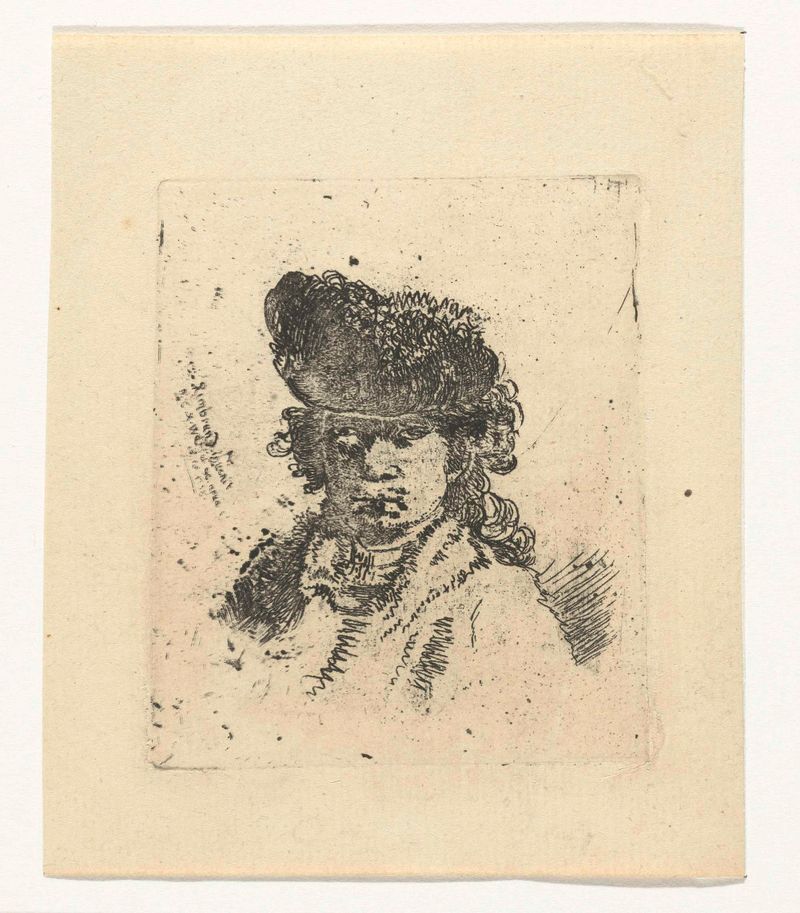
More Portrait Art
Browse all →
Las meninas
Diego Velázquez

Self-portrait with a Bandaged Ear and Pipe
Unidentified artist

Girl with a Pearl Earring
Johannes Vermeer

The Sampling Officials of the Amsterdam Drapers’ Guild, Known as ‘The Syndics’
Rembrandt van Rijn

The Hundred Guilder Print: the man seen on the back in the lower left corner
Rembrandt van Rijn

Portrait of Dr Gachet
Vincent van Gogh