September — History & Facts
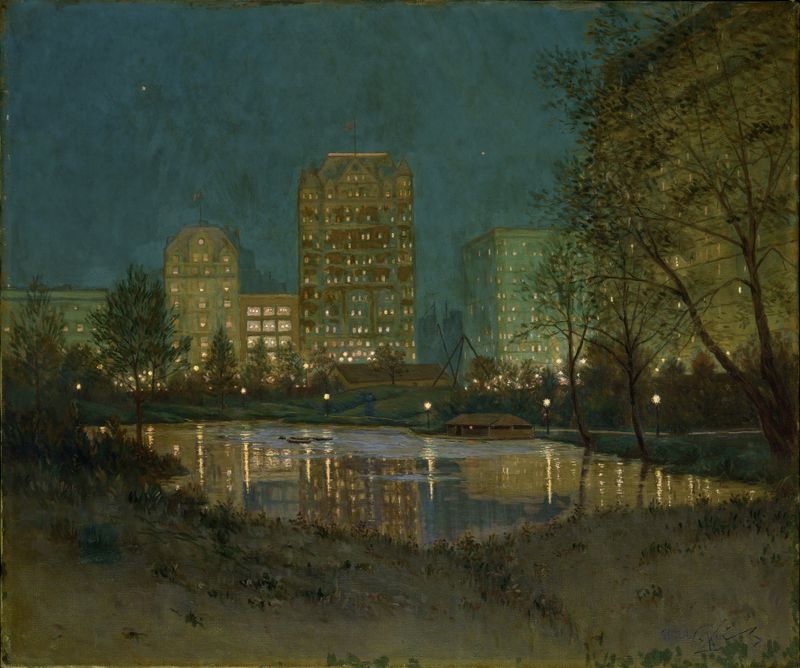
This sentiment captures a profound longing that resonates deeply within us, as we navigate the spaces between what we express and what remains unsaid. Gaze first at the left side of the canvas, where a cascade of golden hues embraces the trees, casting a warm glow that contrasts with the cool blues of the sky. The artist uses a delicate interplay of light and shadow, leading the eye towards the horizon where the sun prepares to bid farewell. Notice how the textured brushstrokes create a sense of movement in the leaves, almost as if they are whispers of autumn’s arrival, each stroke imbued with an emotional weight that invites contemplation. Within this landscape lies an emotional tension between the vibrancy of life and the inevitability of change.
The juxtaposition of the bright foliage against the encroaching dusk speaks to the bittersweet nature of time, evoking feelings of nostalgia and anticipation. The lone figure in the foreground, with their turned back, embodies a sense of solitude, suggesting a quiet moment of reflection amid the beauty and transience of the season. In 1907, while September came to life, William Anderson Coffin was immersed in an era of artistic exploration and change. Working in New York, he found himself influenced by the burgeoning modernist movements that sought to capture the essence of everyday life.
As he painted, the world around him was shifting — the Industrial Revolution was reshaping society, and with it, the way artists perceived their surroundings, pushing Coffin to find subtlety in abstraction and emotional depth in the ordinary.