Servet van wit linnen — History & Facts
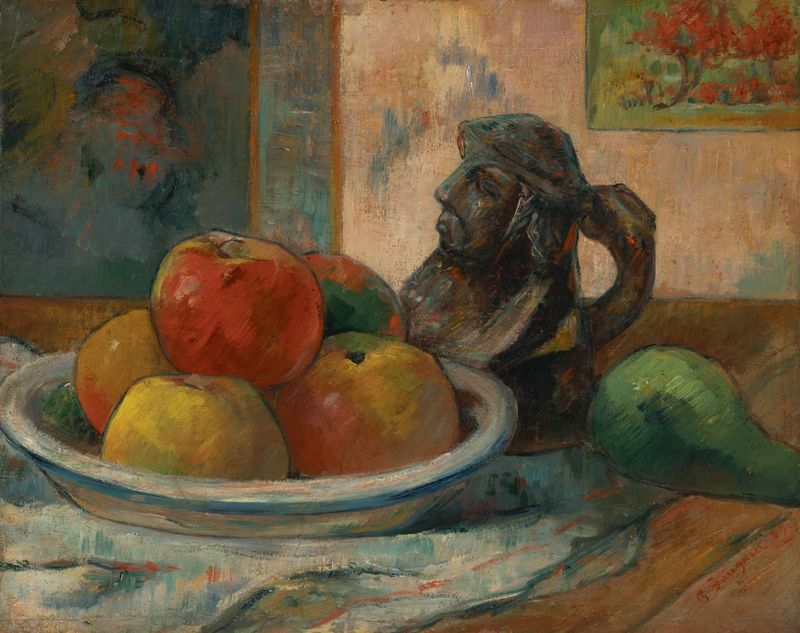
The delicate fabric of Servet van wit linnen, which translates to "Servet of white linen," captures a complex interplay of serenity and violence, evoking the fragility of existence. One can’t help but ponder the tumultuous emotions hidden beneath the pristine surface. Look closely, and you'll first notice the stark contrast between the white linen and the vibrant hues surrounding it. The cloth, rendered with meticulous attention to detail, glimmers under a soft light, inviting the viewer to explore its texture and folds.
As your gaze wanders, the subtle interplay of shadows hints at an unseen turbulence—perhaps a storm awaiting its moment. The artist’s choice of a monochromatic subject against a vivid background creates an arresting tension, drawing focus to the fabric while suggesting a chaotic world beyond it. Exploring further, one might see that the white linen symbolizes both purity and the violence of life that threatens to disrupt it. The gentle curves of the fabric suggest softness, yet the surrounding colors pulse with energy, hinting at an underlying struggle.
This duality speaks to the fragility of beauty amid chaos, where the serene exterior belies the potential for conflict. Each fold and crease tells a story of resilience, a quiet testament to the power of creation amid turbulence. Painted in 1731, this work reflects the uncertainties of its time—a period marked by social upheaval and the shifting tides of artistic expression. The unknown artist, part of a broader movement acknowledging the beauty of everyday objects, sought to elevate the mundane to the extraordinary.
In a world where conflict was ever-present, such an artwork resonates with the desire to find grace amidst chaos, an enduring theme in the human experience.