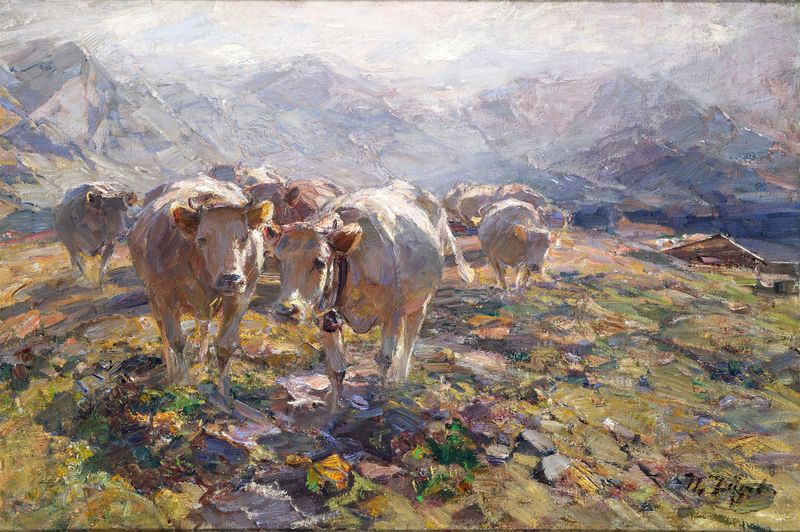
Sheeps in Moorland — History & Facts
In Sheeps in Moorland, the expanse of landscape resonates with a deep, unfulfilled longing, capturing a moment suspended in time. Look to the horizon where the gentle undulations of the moor blend seamlessly into the soft, muted palette of blues and greens. The sheep, dotting the terrain like whispers of white against the earth, invite your gaze to wander across the textured surface, revealing the artist’s delicate handling of fur and foliage. Notice how the light dances on the grasses, the strokes flowing together to create a rhythmic pulse that mirrors nature's serenity. As you delve deeper, the contrasts become evident: the stillness of the sheep against the windswept moor, a symbol of solitude amidst a vastness that feels both alive and desolate.
The use of light hints at fleeting moments, evoking a nostalgia for a simpler existence, while the composition draws a contemplative pause, making the viewer reflect on what lies beyond the visible horizon. Each sheep becomes a vessel for introspection, a reminder of the yearning for connection within the boundless landscape. Heinrich Von Zügel painted Sheeps in Moorland between 1901 and 1904 during a period when he was deeply engaged with nature and rural themes. Living in Germany, he was influenced by the burgeoning movement of plein air painting, which emphasized capturing the essence of the outdoors.
This work reflects his fascination with the pastoral life, showcasing a time when artists sought solace and inspiration from the natural world amidst the rapid changes of the industrial age.