Siena — History & Facts
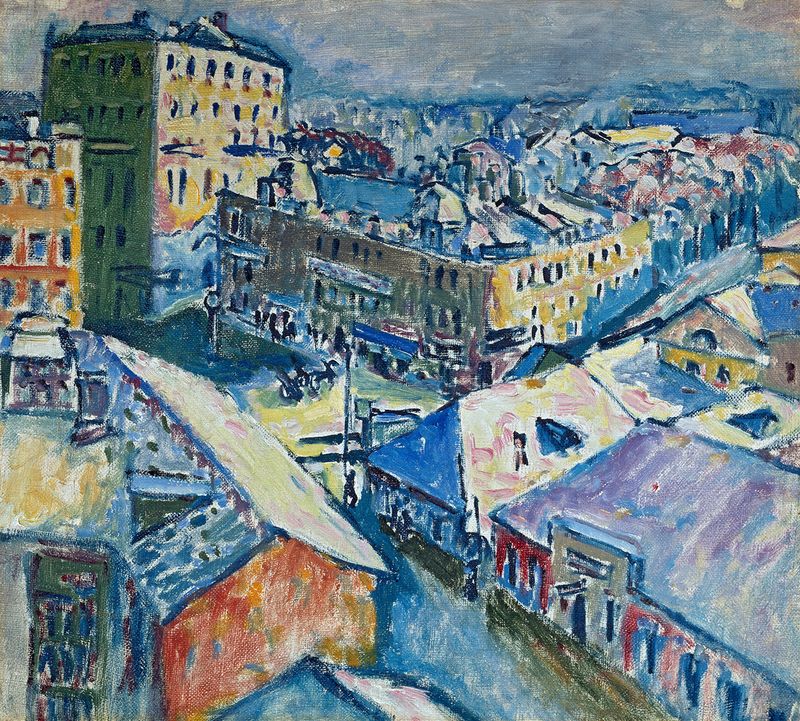
In the delicate interplay of innocence and experience, the essence of life reveals itself through art. What is it that makes us see beauty in the ordinary? It is in this quiet contemplation that the work begins to resonate. Look to the left of the canvas, where soft, muted tones create a gentle backdrop, inviting you into a world where form seems to dissolve into emotion. Notice how the various shades of blue and earthy hues blend seamlessly, evoking a sense of tranquility that envelops the viewer.
The layering of colors suggests depth, while the fluid brush strokes impart an ephemeral quality, making the scene feel alive yet elusive. At the heart of the composition lies a juxtaposition: the vibrant colors pulse with vitality, while the almost ghostly figures seem caught between worlds. This duality speaks to the tension of innocence lost and preserved, as the figures embody both joy and a haunting awareness of the passage of time. Dismorr's choice of abstraction adds a layer of mystery; what we cannot fully grasp becomes all the more intriguing, prompting reflection on the fleeting nature of youth. Created in 1911, the artwork reflects Dismorr's exploration of modernism during a period of artistic upheaval.
Living in London, she was influenced by a burgeoning avant-garde movement that sought to break from tradition. This time was marked by a search for new forms of expression, mirroring changes in society and culture, as artists were delving into personal emotions and broader existential themes.