Sir Charles Warre Malet’s String of Racehorses at Exercise — History & Facts
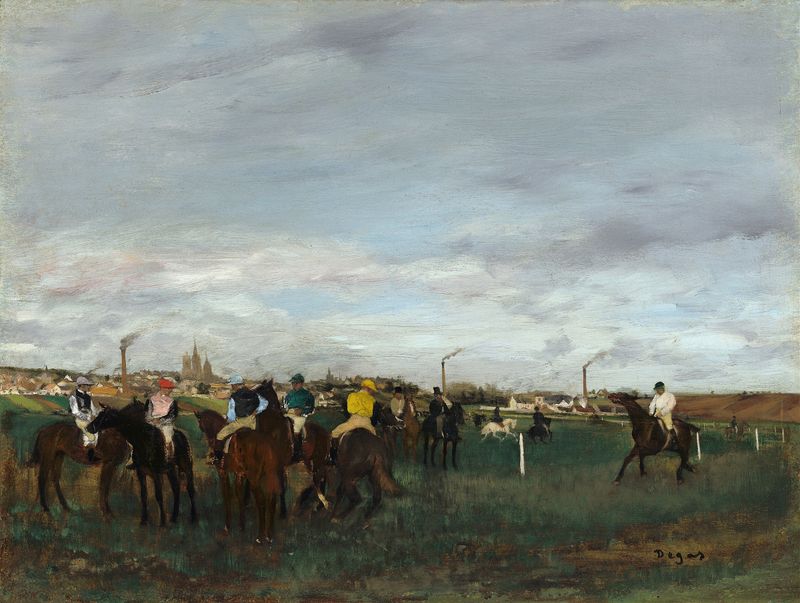
In this canvas, the movement of the horses speaks volumes, encapsulating a world where grace and power intertwine in fleeting moments. Look to the center, where the majestic figures of the horses are captured mid-stride, their muscles taut and ready, embodying vitality and speed. The artist employs a loose yet deliberate brushstroke to convey the energy of the scene, while warm hues of ochre and brown reflect the vibrancy of the training ground. Each horse appears to possess a unique spirit, with their manes flowing like banners, drawing the viewer's eye toward the camaraderie and competition that define this world. Beyond the surface of racing, the composition reflects a deeper narrative of ambition and the relentless pursuit of excellence.
The horses, though at play, hint at the fierce battles that lie ahead; the tension between their instinctual power and the discipline required for success is palpable. The surrounding figures, trainers and jockeys, stand in quiet anticipation, embodying a contemplative silence that juxtaposes the frenetic energy of the horses, hinting at the weight of expectation. Francis Sartorius painted this work during the late 18th century, a time when racing was becoming a symbol of social status and competition in England. As the interest in equestrian pursuits surged, Sartorius found himself in a rich environment, surrounded by patrons eager to celebrate the elegance of these magnificent creatures.
His focus on horses was not merely aesthetic; it mirrored a cultural moment where the beauty of movement was exalted.