
Slapende jongen — History & Facts
Could a single brushstroke hold eternity? In the delicate slumber of a young boy, captured with such tenderness, the essence of innocence is preserved forever, inviting the viewer to ponder the fleeting nature of childhood. Focus on the serene face of the boy, slightly tilted, framed by tousled hair that dances softly in the imagined breeze. Look at the gentle blush of his cheeks, contrasting against the muted background, which serves to elevate the subject’s purity. Notice how the artist’s fluid brushwork creates an ethereal quality, the soft edges blurring the line between reality and dream, as if the child resides in a realm untouched by time. Delve deeper into the painting's emotional layers; the rhythmic rise and fall of the boy's chest symbolizes the innocence of sleep, a state free from the burdens of the world.
The subtle warmth of the color palette evokes a sense of safety and comfort, while the boy's serene expression speaks to a profound stillness, inviting reflections on vulnerability and the transient beauty of youth. The contrast between this tranquility and the chaos of life outside the frame highlights the ephemeral nature of innocence. Charles Brias created Slapende jongen in 1837, a period marked by a shift in artistic focus towards more intimate and personal subjects. Living in a time when Romanticism was prominent, he sought to explore themes of vulnerability and emotional depth.
This painting exemplified his mastery in capturing fleeting moments, reflecting a broader cultural fascination with childhood and the purity it represents amidst the realities of life.
More Artworks by Charles Brias
Browse all →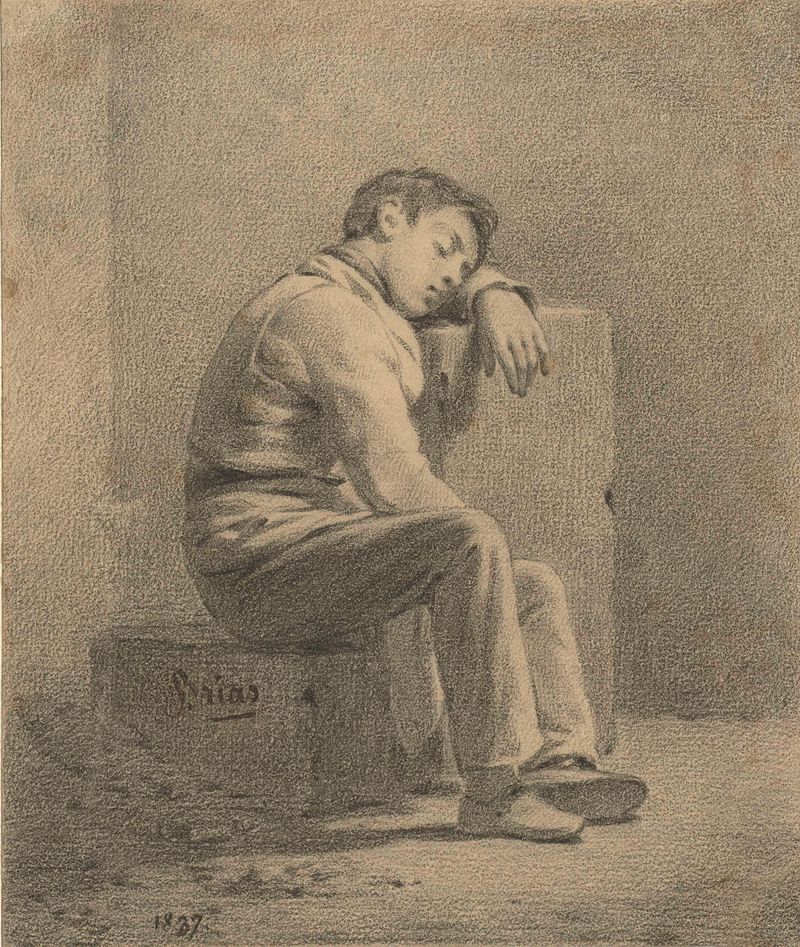
More Portrait Art
Browse all →
Las meninas
Diego Velázquez

Self-portrait with a Bandaged Ear and Pipe
Unidentified artist

Girl with a Pearl Earring
Johannes Vermeer

The Sampling Officials of the Amsterdam Drapers’ Guild, Known as ‘The Syndics’
Rembrandt van Rijn

The Hundred Guilder Print: the man seen on the back in the lower left corner
Rembrandt van Rijn

Portrait of Dr Gachet
Vincent van Gogh