Somerset House — History & Facts
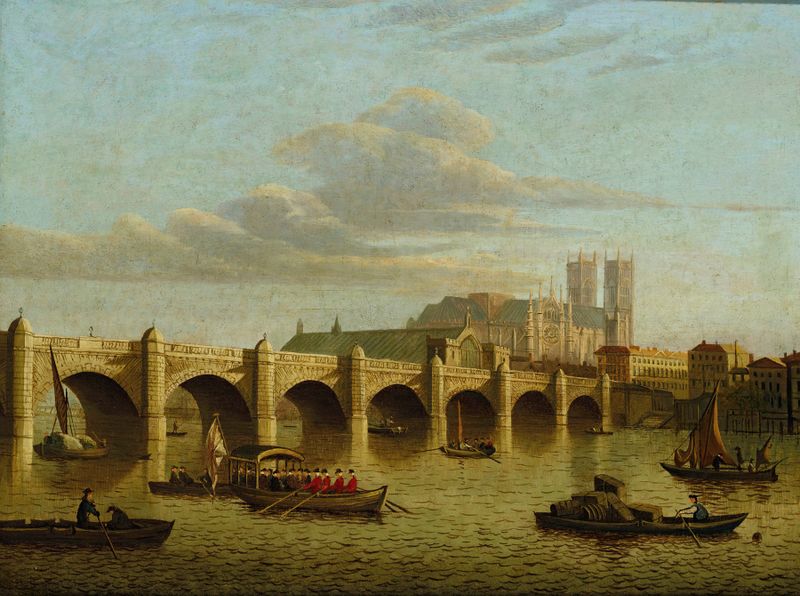
In a world where memories fade and moments slip into oblivion, art serves as a vessel of faith, holding onto what is precious. Look to the left of the canvas, where soft morning light spills across the water, reflecting the grand architecture of Somerset House. The deliberate strokes of the artist create a delicate balance between the stillness of the water and the grandeur of the structure, inviting the viewer’s gaze to dance between the two. Notice how the hues of blue and gold harmonize, enhancing the sense of serenity and reverence that permeates this scene. Beneath the surface, there lies an emotional tension between permanence and transience.
The elegant façade of the building symbolizes the human desire to leave a mark on the world, while the rippling water hints at the inevitable passage of time. Small boats at the water’s edge, almost ghostly in their presence, remind us that life persists, yet remains fleeting. This duality of existence evokes a quiet contemplation on faith, as we grapple with what we cherish against the backdrop of time’s relentless march. The artist, a follower of Sir John Dean Paul, created this work during a period when Romanticism was gaining prominence, though the exact date remains undetermined.
Living in the early 19th century, as industrialization began to reshape society in Britain, the artist navigated a rapidly changing world. This particular piece reflects a lingering admiration for nature's beauty and architecture, as well as an understanding of the past's significance against a backdrop of transformation.