
Sonnenuntergang am Hintersee in Berchtesgaden — History & Facts
When did color learn to lie? The illusion of vibrancy can mask the void beneath, revealing the stark juxtaposition of beauty and emptiness. Look to the bottom right, where the deep greens of towering pines bleed into the tranquil waters of the Hintersee. Notice how the delicate brushstrokes create ripples that reflect the fiery oranges and soft purples of the setting sun, drawing the viewer’s gaze upward. The composition is masterfully orchestrated, with the horizon line inviting contemplation, while the interplay of light and shadow exposes the layered complexity of the landscape.
Every stroke exudes a sense of both calm and unease, as if the landscape holds secrets that whisper just beyond perception. Amidst this picturesque scene, there lies an emotional tension between the richness of nature and the silent void it can convey. The vibrant colors of the sunset, though breathtaking, overshadow the murkiness lurking in the depths of the water, hinting at an unexpressed melancholy. The viewer is caught in a paradox; beauty is both an allure and a mask, suggesting an inner emptiness that reflects the transience of life. In 1858, when this piece was created, Albert Zimmermann was nestled in the scenic landscapes of Berchtesgaden, Germany, a region known for its dramatic natural beauty.
This period was marked by a growing appreciation for nature among Romantic artists, as they sought to capture its essence amid emerging industrialization. Zimmermann's work, with its rich colors and serene compositions, embodies this duality of admiration for nature while hinting at the existential concerns of his time, making his art resonate deeply with both the viewer and the era itself.
More Artworks by Albert Zimmermann
Browse all →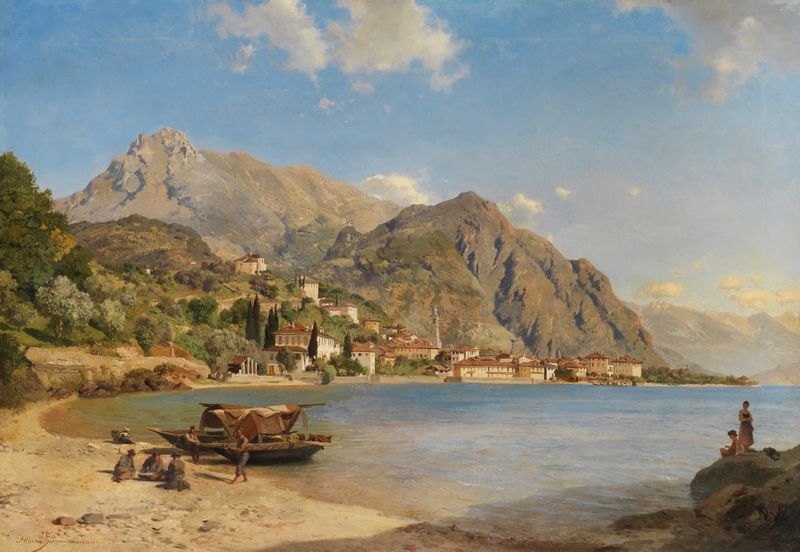
Am Ufer des Comer Sees (Menaggio)
Albert Zimmermann

Gewittersturm im Hochgebirge
Albert Zimmermann

A Lake in the Alps, in the Background the Monte Rosa Chain in Switzerland
Albert Zimmermann

Landscape
Albert Zimmermann
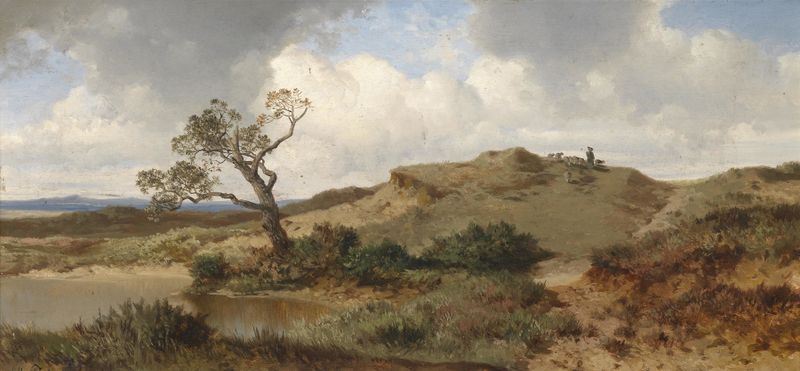
Schwäbische Alb
Albert Zimmermann

Coastal Landscape In Sorrento Near Naples
Albert Zimmermann
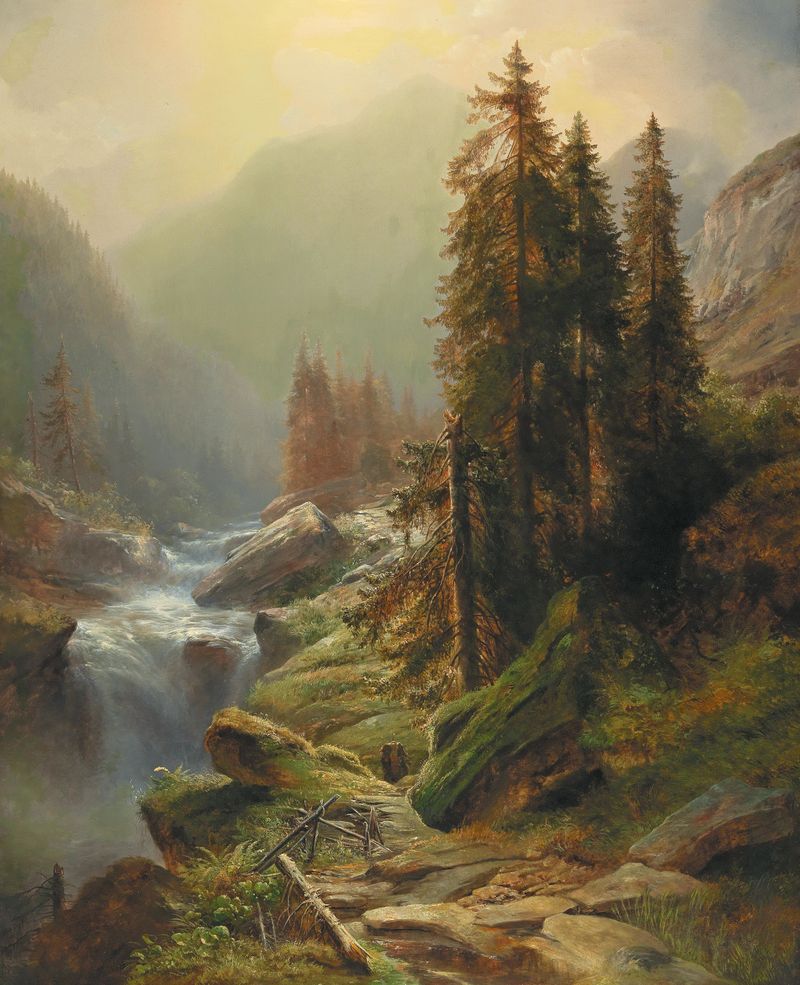
Large Mountain Landscape
Albert Zimmermann
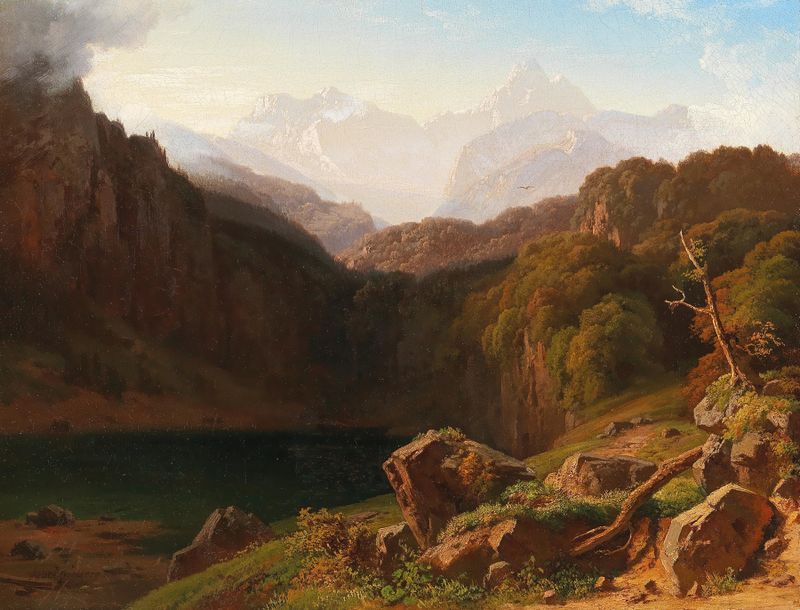
A View of Grossglockner from Kals
Albert Zimmermann
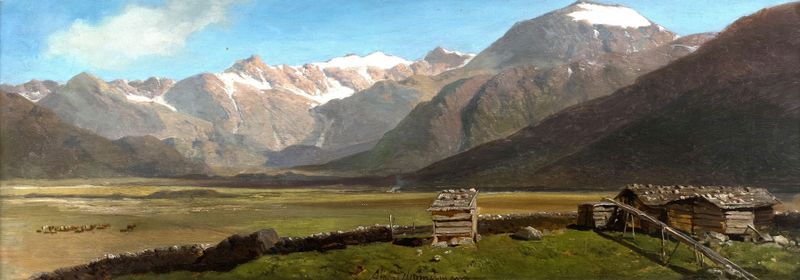
Almhütten auf einer Ebene mit Gebirgskette
Albert Zimmermann
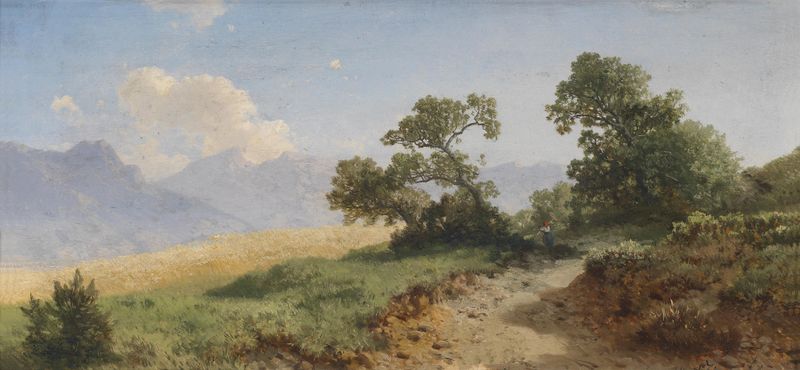
Landschaft mit figürlicher Staffage
Albert Zimmermann





