
Speke Hall — History & Facts
When did color learn to lie? In Speke Hall, earthy tones and a vibrant palette strike a delicate balance, conjuring a world where truth and illusion entwine. Focus on the foreground, where the textured wood of the hall’s beams invites your gaze. The meticulous detailing of the architecture creates an imposing presence, grounding the viewer in a realm that feels both intimate and grand. Notice how the sunlight filters through the trees, casting dappled patterns across the scene, enhancing the interplay of light and shadow.
The artist’s brushwork reveals a keen understanding of space, drawing your attention to both the intricate craftsmanship of the structure and the surrounding flora that breathes life into the composition. Beneath the surface, Speke Hall resonates with emotional tensions—the stark contrast between the sturdy permanence of the building and the ephemeral nature of the light suggests a moment caught between the past and present. The lush greenery signifies life and vitality, while the hall itself stands as a testament to time’s passage. The soft vibrancy of the color palette hints at a tranquility that belies the architectural might, creating a harmonious dialogue between stability and the fleeting beauty of nature. Thomas Riley created this work in a historical context where the English landscape genre was evolving.
He painted it during a period marked by a renewed interest in national heritage and rural life, often reflected in his depictions of traditional English architecture. This era saw a move away from the grandiosity of earlier styles to a more sincere representation of places that held personal significance, indicating a shift in how artists engaged with their surroundings.
More Artworks by Thomas Riley
Browse all →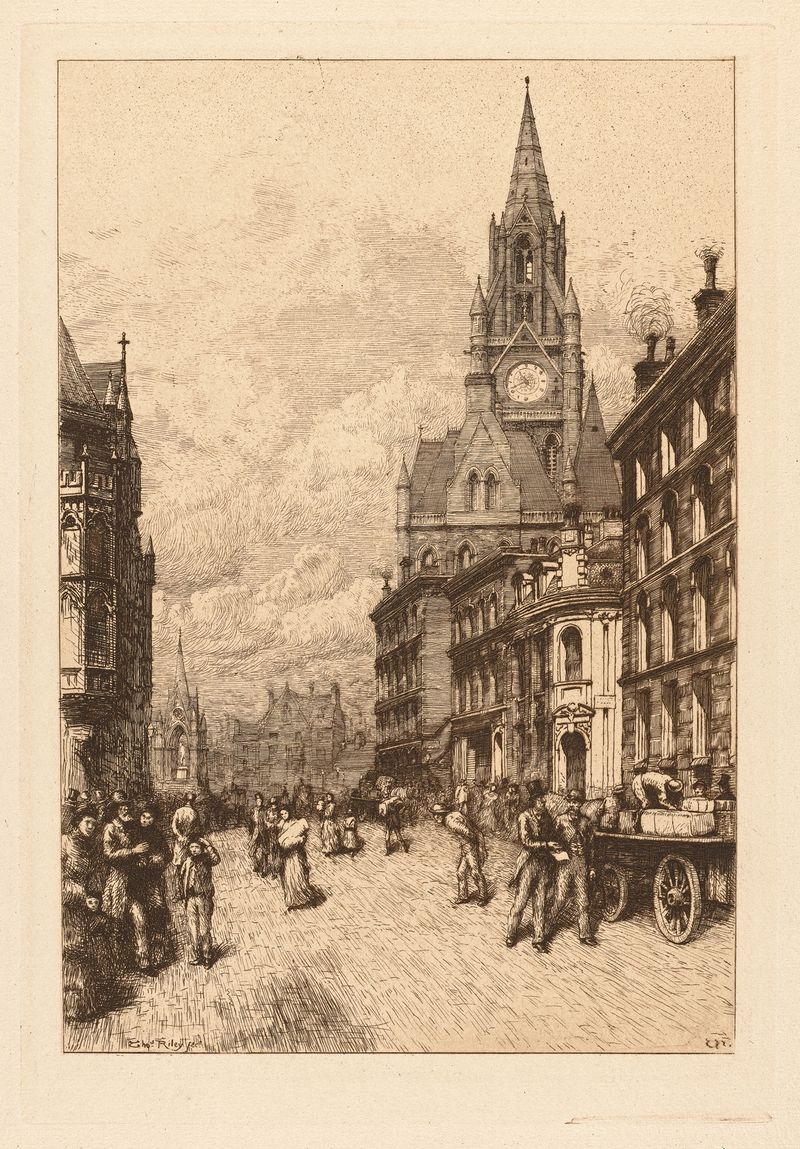
More Architecture Art
Browse all →
The statue of Liberty
Frédéric Auguste Bartholdi

View of Houses in Delft, Known as ‘The Little Street’
Johannes Vermeer

View of Houses in Delft, Known as ‘The Little Street’
Johannes Vermeer

The Cathedral in Rouen. The portal, Grey Weather
Claude Monet

The yellow house
Vincent van Gogh

The Church in Auvers-sur-Oise, View from the Chevet
Vincent van Gogh