Spring in the Wachau valley — History & Facts
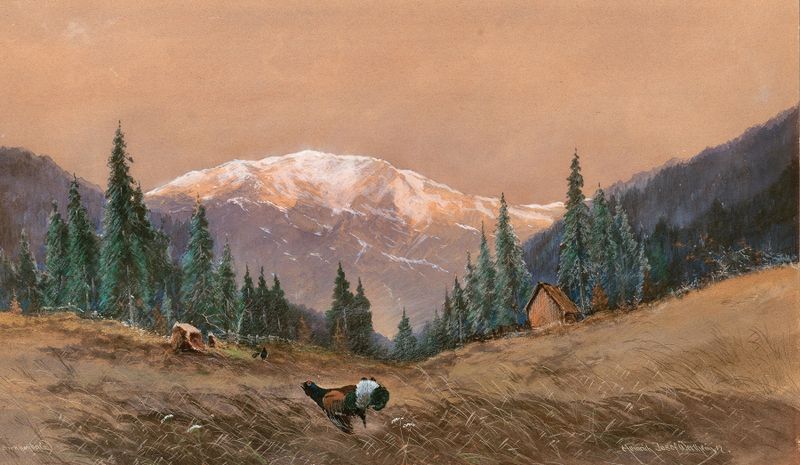
In the embrace of nature's revival, hope emerges anew with the season's verdant promise. The delicate interplay of color and light invites us to pause and reflect on life's cyclical beauty. Look to the left at the gentle undulation of the hills, painted in lush greens that speak of fertility and renewal. The artist uses soft, impressionistic brush strokes to convey the warmth of sunlight filtering through the trees, casting dappled shadows on the vibrant fields below.
Notice how the foreground is filled with blossoming wildflowers—each petal a celebration of life's resurgence, drawing the eye deeper into the pastoral landscape. The tranquil scene contrasts the vibrancy of life with the stillness of the water reflecting the sky. A solitary figure, perhaps a farmer or a wanderer, stands quietly at the edge of a river, embodying the intimate connection between humanity and nature. This subtle presence serves as a reminder of our place in the world, caught in the delicate balance between labor and leisure, persistence and serenity. In 1907, amidst the burgeoning art movements in Europe, Spring in the Wachau Valley was painted during Wertheim's formative years in Vienna, where he explored the beauty of rural landscapes.
His work emerged during a time of social and political change, reflecting an era where nature offered solace, and hope flourished amid uncertainty. This piece stands as an emblem of that period, capturing a moment where one could escape into the refreshment of spring’s embrace.