Spring Landscape — History & Facts
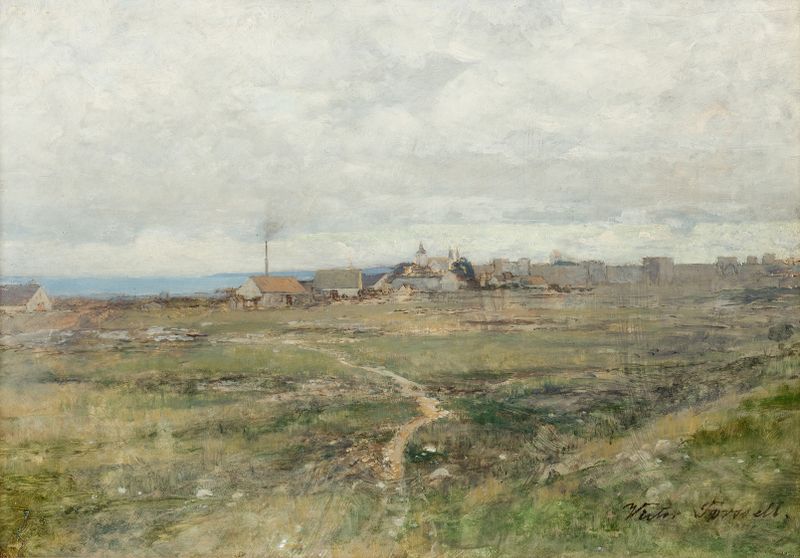
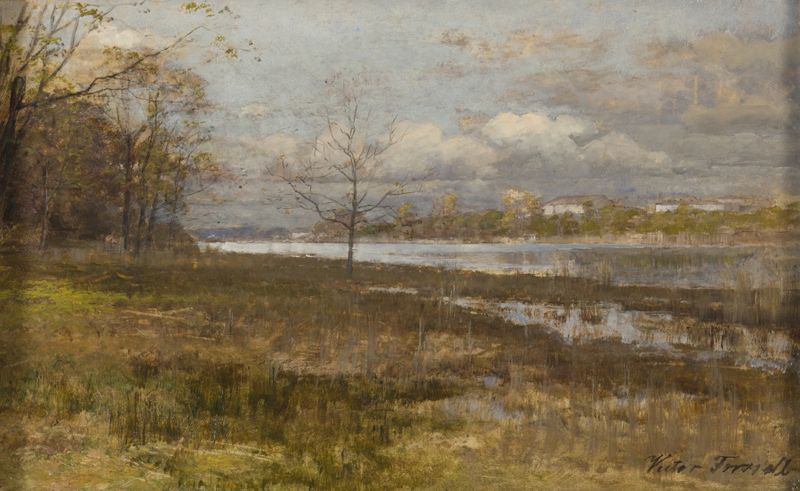
Can beauty exist without sorrow? In Spring Landscape, the vibrant colors beckon with a promise of renewal, yet a whisper of melancholy underlies the scene, suggesting an unspoken betrayal of the heart. Focus on the lush green fields that stretch across the canvas, inviting the eye to wander. Notice how the golden rays of sunlight filter through the delicate clouds, illuminating the wildflowers that bloom in profusion. The soft brushstrokes create a harmonious dance of color, inviting a sense of peace while cleverly contrasting with the shadowy corners where darkness lingers.
Forssell’s masterful use of light not only defines the landscape but also hints at the complexity of emotions intertwined with natural beauty. Within the idyllic setting lies an emotional tension that surfaces through small details. The juxtaposition of the lively foreground against distant, foreboding hills evokes feelings of longing and nostalgia, suggesting that beauty often masks deeper sorrows. The vibrant blooms could symbolize hope and new beginnings, yet their fleeting nature mirrors the fragility of trust and love, leaving a lingering sense of vulnerability in the viewer's heart. Victor Forssell painted Spring Landscape in 1884 during a period of artistic exploration in Sweden, where he was influenced by the Impressionist movements sweeping through Europe.
At this time, he sought to capture the essence of nature's beauty while battling personal tribulations, reflecting a tension between joy and pain in his work. This painting encapsulates both his artistic prowess and the emotional complexities of a life intertwined with beauty and betrayal.