St. Michael’s Mount, Cornwall — History & Facts
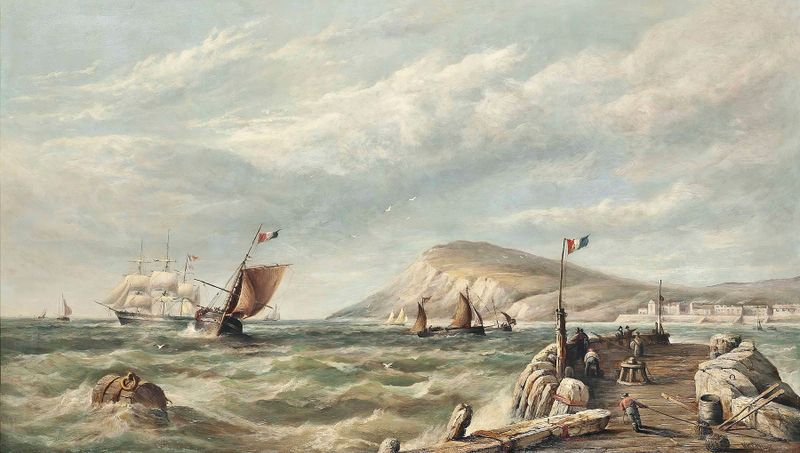
When did color learn to lie? In the vivid hues of St. Michael’s Mount, Cornwall, a sense of nostalgia weaves itself into the fabric of memory, inviting contemplation on the passage of time and the nature of perception. Focus first on the vibrant blues and greens that dance across the canvas, where the shimmering sea meets the rugged coastline. The brushwork captures the playful sunlight atop water, while the imposing silhouette of the mount stands resolutely against the sky.
Notice how the foreground is alive with strokes of color that guide the eye toward the centerpiece, creating a visual harmony between the land and sea, as if they are whispering secrets to one another. Yet, beneath this serene landscape lies an undercurrent of tension. The bright colors suggest a moment frozen in time, yet the shadows hint at the inevitable march of reality—a reminder of nature’s overwhelming power over human constructs. The juxtaposition of the idyllic scenery and the looming mount evokes feelings of longing, as if the viewer is caught between the allure of the past and the relentless present.
Each element speaks to the transience of beauty, a fleeting glimpse of what once was. Henry King Taylor painted during a time when the Impressionist movement was reshaping perceptions in art. Little is known about the exact circumstances of this work, but his ability to capture the essence of a place speaks to a broader trend of artists seeking to evoke emotion through their landscapes. The period was marked by a shift towards individual expression, reflecting the artist's desire to encapsulate both the tangible and the ephemeral.