
St. Paul’s — History & Facts
When did color learn to lie? In the haunting stillness of St. Paul’s, the silent shadows and muted tones evoke an unsettling emptiness that lingers in the air, beckoning viewers to ponder the authenticity of their perceptions. Look to the foreground where the grand façade of the iconic cathedral stands regally. The intricate details of its stonework, bathed in soft grays and earthy browns, draw the eye immediately, while the distant figures of passersby appear diminutive against the monumental structure.
Notice how the light gently falls upon the dome, contrasting with the darkening sky above, creating a tension between the sanctuary of the sacred and the encroaching solitude of urban life. The composition balances grandeur with a profound sense of stillness, expertly demonstrating the artist’s skilled handling of space and atmosphere. As you delve deeper into the painting, you'll observe the interplay of light and shadow that reflects not only the architectural beauty but also the emotional weight of the scene. The shadows cast by the clouds seem to envelop the cathedral, suggesting a surrounding emptiness that contrasts with the bustling life outside its walls.
These details speak to a duality: the sacred and the secular; a sanctuary amidst the chaos of modern existence. The figures, perhaps lost in thought or moving hastily, become mere whispers in the presence of such monumental stillness. In the early 1860s, David Roberts was in London, capturing the spirit of a city in transition. This period saw the rise of industrialization, which transformed the urban landscape and influenced artistic movements.
Working at a time when Romanticism was giving way to modernity, he sought to document not just architecture, but the atmosphere surrounding it, revealing an intrinsic complexity within spaces often deemed merely beautiful.
More Artworks by David Roberts
Browse all →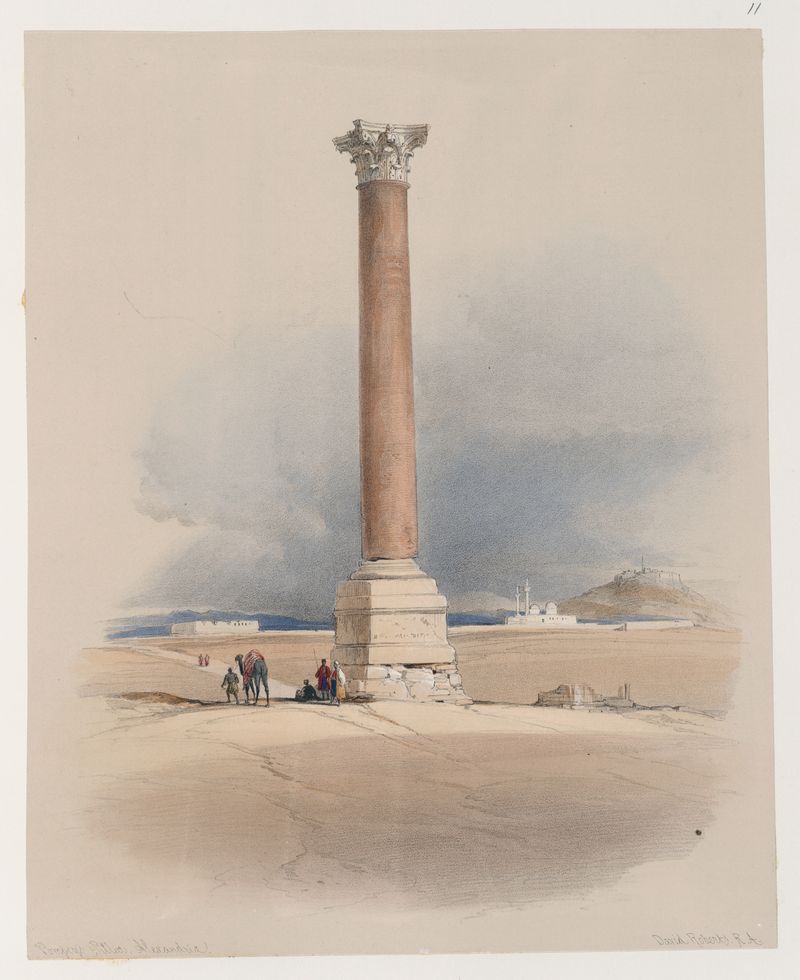
Pompey’s Pillar, Alexandria.
David Roberts

Approach to the Fortress of Ibrim.
David Roberts

Karnac [Karnak]. Nov. 29th, 1838.
David Roberts
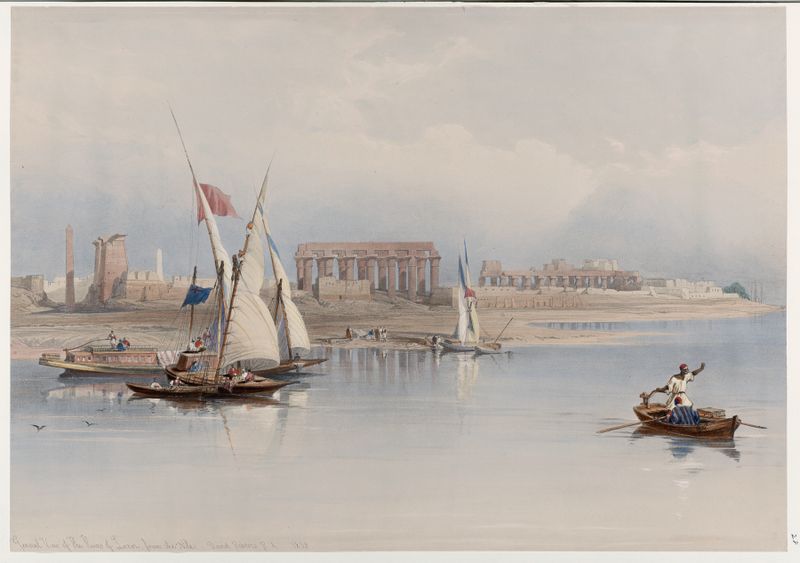
General view of the ruins of Luxor, from the Nile. 1838.
David Roberts

Statues of Memnon at Thebes, during the inundation.
David Roberts

Entrance to the tombs of the kings of Thebes. Bab-el-Malouk [Bîbân al-Mulûk].
David Roberts

The Fortress of the Alhambra, Granada
David Roberts
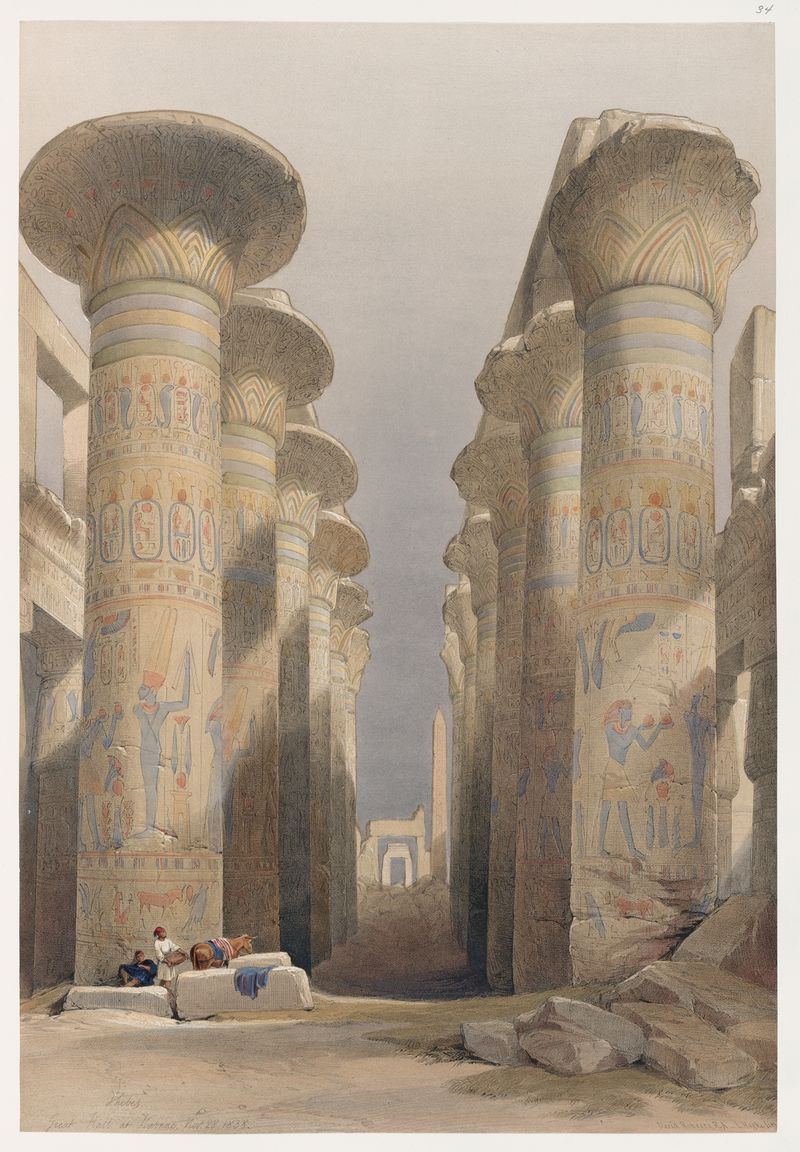
Thebes. Great Hall at Karnak. Nov. 28, 1838.
David Roberts
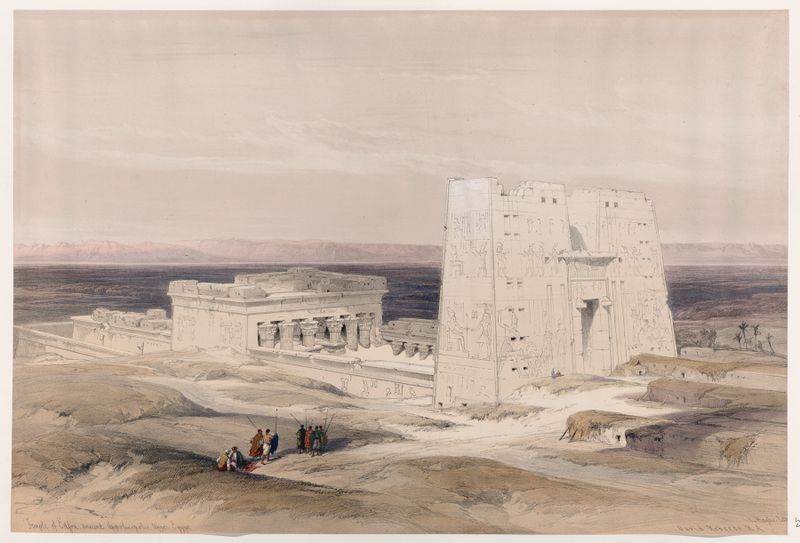
Temple of Edfou [Idfû], ancient Appolinopolis, Upper Egypt.
David Roberts

Temple of Kalabshee [Kalabsha, Kalâbishah], Nubia. Nov. 1838.
David Roberts
More Architecture Art
Browse all →
The statue of Liberty
Frédéric Auguste Bartholdi

View of Houses in Delft, Known as ‘The Little Street’
Johannes Vermeer

View of Houses in Delft, Known as ‘The Little Street’
Johannes Vermeer

The Cathedral in Rouen. The portal, Grey Weather
Claude Monet

The yellow house
Vincent van Gogh

The Church in Auvers-sur-Oise, View from the Chevet
Vincent van Gogh