
Stadhuis Naarden — History & Facts
What if beauty was never meant to be finished? In Bob Brobbel’s Stadhuis Naarden, this question reverberates through the brushstrokes, revealing a façade that tells of both splendor and the scars left behind by violence. Look to the center of the canvas, where the stately town hall rises resiliently against a muted, stormy sky. The architecture, robust and proud, contrasts sharply with the jagged edges of the surrounding landscape. Notice how the muted earth tones create a sense of somberness, as if the building itself bears the weight of history—a testament to past conflicts that once raged within its walls.
The rich textures draw the eye, guiding you into a dialogue with the structure, invoking both admiration and unease. Yet, it’s the interplay of light and shadow that evokes deeper emotions. The way the light catches the building’s ornate details suggests hope, while the encroaching shadows hint at threats that loom just out of sight. The stark contrasts reflect a dichotomy of safety and peril, beauty and violence—reminders that even in the most exquisite forms, the remnants of destruction linger.
Each brushstroke serves to illustrate not only a physical structure but the turbulence of human experience that surrounds it. Brobbel painted Stadhuis Naarden in 1950, during a period when Europe was grappling with the aftermath of World War II. Living in the Netherlands, he experienced firsthand the devastation that conflict wrought on cities and communities. This work emerges from a time when artists were seeking to process loss, resilience, and the complexity of beauty, situating the painting both in personal and historical contexts.
More Artworks by Bob Brobbel
Browse all →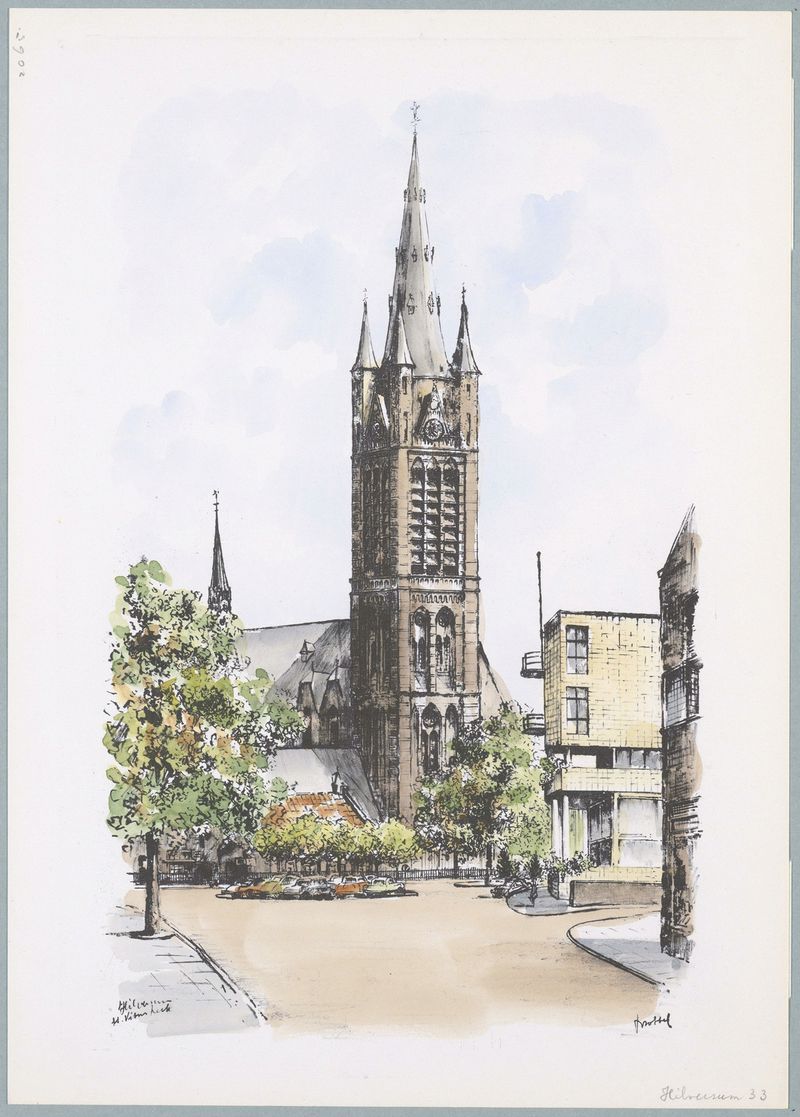
Sint Vitus kerk met hotel
Bob Brobbel
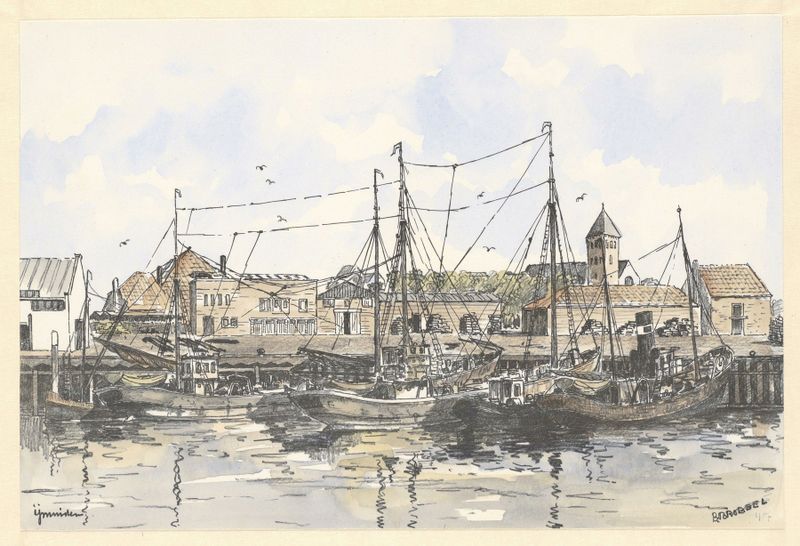
De haven van IJmuiden, met rechts op de achtergrond het Ned. Herv. kerkje (de in 1880 gebouwde kerk is in 1968 afgebroken)
Bob Brobbel

De enige in Noord-Holland bewaard gebleven standerdmolen
Bob Brobbel

Gezicht op Ouderkerk over de Amstel vanaf de Amstelzijde
Bob Brobbel

Ned. Herv. kerk
Bob Brobbel

De Kerkbrink met de oude Hervormde Kerk
Bob Brobbel

Kerk en omgeving
Bob Brobbel

De Kerkbrink met de later afgebrande oude Hervormde Kerk
Bob Brobbel
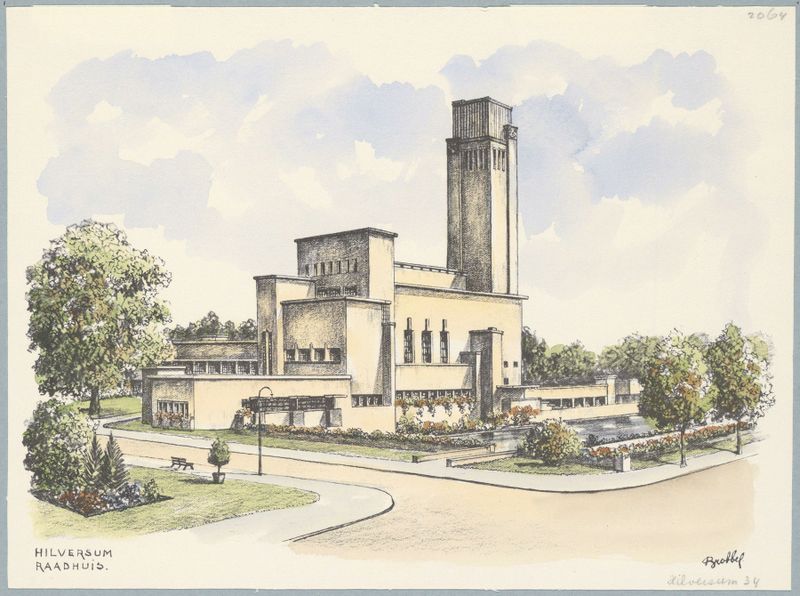
Gezicht op het Raadhuis van Hilversum
Bob Brobbel

St. Nicolaaskerk
Bob Brobbel
More Architecture Art
Browse all →
The statue of Liberty
Frédéric Auguste Bartholdi

View of Houses in Delft, Known as ‘The Little Street’
Johannes Vermeer

View of Houses in Delft, Known as ‘The Little Street’
Johannes Vermeer

The Cathedral in Rouen. The portal, Grey Weather
Claude Monet

The yellow house
Vincent van Gogh

The Church in Auvers-sur-Oise, View from the Chevet
Vincent van Gogh