Steiler Hang mit Bachgrund — History & Facts
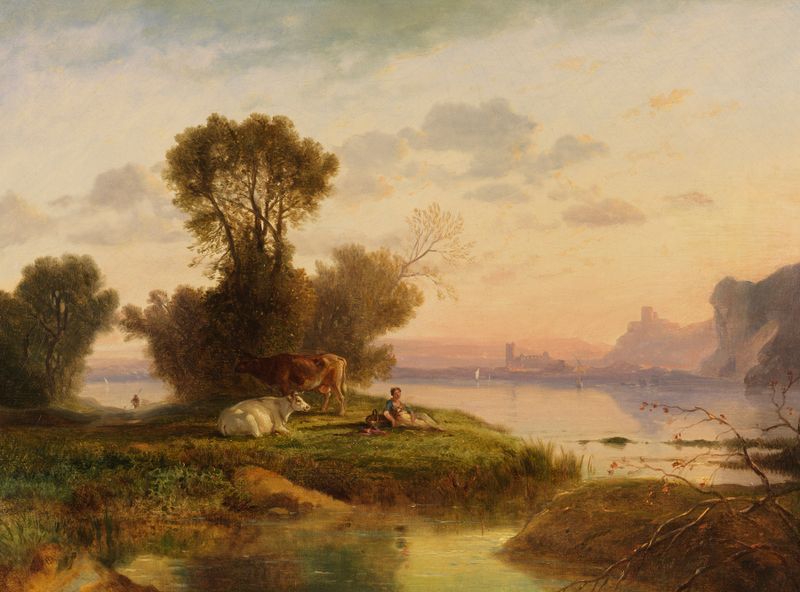
When did color learn to lie? In the realm of landscapes, hues whisper tales of beauty and sorrow, the gentle brush of nature's hand concealing deeper truths beneath. Look toward the foreground, where a muted palette of earthy greens and browns invites you into a serene, yet melancholic vista. The steep incline, rendered with meticulous detail, leads your gaze to the tranquil brook nestled below, its soft reflections shimmering with hints of blue and silver. Notice how the dappled sunlight breaks through the foliage, playing with shadow and illuminating the delicate textures of leaves—each stroke seeming to breathe life into the scene, while simultaneously foreshadowing an unspoken tale of fragility. Beneath this picturesque surface lies a poignant contrast between the stability of the land and the flowing uncertainty of the water.
The steepness of the hill suggests the weight of expectation, while the brook’s meandering path may represent the inevitable course of loss and change. Each element dances in a delicate balance, evoking a sense of nostalgia that resonates with the viewer, urging contemplation on the passage of time and what is often left unexpressed amid the beauty of nature. Heinrich Dreber painted this work in 1843, during a period marked by personal and artistic reflection. Living in Germany, he navigated the shifting tides of Romanticism, where artists sought to reconnect with nature's essence amidst rapid industrialization.
This painting emerges as a quiet testament to the duality of existence, a captured moment that resonates with the artist’s own explorations of beauty, loss, and the fleeting nature of life.