Steilküste am Golf von Genua — History & Facts
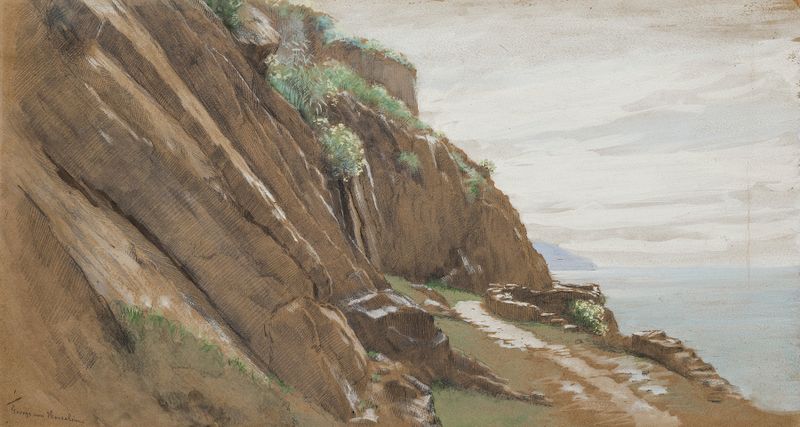
Can paint confess what words never could? In Steilküste am Golf von Genua, the viewer is drawn into a world where nature's grandeur is rendered with delicate precision, inviting reflection on the illusions that art can create. Look to the foreground, where rocky cliffs rise sharply, their textures expertly captured in a symphony of earthy browns and greens. Notice how the artist plays with light; the glimmers of the sea reflect the sun's rays, casting a mesmerizing interplay of shadows and brilliance. The horizon line dances with soft blues and whites, suggesting both calmness and turbulence, while the clouds above hint at an impending change, imbuing the scene with a sense of anticipation. Beneath the surface of this picturesque coastline lies a profound tension between reality and representation.
The rugged cliffs symbolize both strength and vulnerability, a reminder of nature’s untamed beauty. The serene ocean, however, speaks to the ever-changing moods of existence, offering a duality that invites the viewer to contemplate the layers of meaning behind the tranquil facade. Here, the fleeting moment captured becomes a metaphor for the complexities of life—where illusion often disguises deeper truths. In the late 19th century, George von Hoesslin created this work in an era marked by the rise of Impressionism and the shifting perspectives on landscape painting.
Living in Germany, he was influenced by the naturalistic movement that sought to embrace and document the surrounding world with authenticity. As artists began to explore light and color more freely, Hoesslin's dedication to capturing the essence of the coastal scene illustrates the era's pursuit of beauty through the lens of both reality and imagination.