
Stevenson’s House, Vailima, Apia, Samoa — History & Facts
Did the painter know this moment would outlive them? In Stevenson’s House, Vailima, Apia, Samoa, a quiet serenity envelops the scene, inviting contemplation and peace. Look to the foreground where a graceful veranda extends, framed by lush tropical flora. The gentle curvature of the architecture melds with the surrounding landscape, creating a harmonious dialogue between man and nature. Notice how the dappled sunlight filters through the leaves, casting soft shadows that dance across the wooden floor, suggesting warmth and stillness.
Each brushstroke conveys the textured beauty of the foliage, intertwining vibrant greens with the muted earth tones of the house, illustrating a sanctuary amidst the island's wild allure. Delve deeper into the contrasts present within the artwork. The sturdy structure stands as a testament to human resilience, yet it is embraced by the languid grace of the tropical setting. There’s a palpable tension between the permanence of the dwelling and the ephemeral quality of the moment, as if time itself pauses to admire the tranquility of life at Vailima.
The absence of figures amplifies this solitude, transforming the house into a character of its own, one that holds the unsung stories of its occupants and the land it rests upon. In 1898, William Francis Herring created this work during a period of profound change in the art world, marked by the rise of Impressionism and a shift toward capturing the essence of moments rather than mere representations. Living in Samoa, he was deeply influenced by the natural beauty surrounding him and the legacy of Robert Louis Stevenson, who had found refuge and inspiration in the same locale. This painting not only reflects Herring's artistic journey but also immortalizes the serene spirit of a place that cradled the hopes and dreams of its inhabitants.
More Artworks by William Francis Herring
Browse all →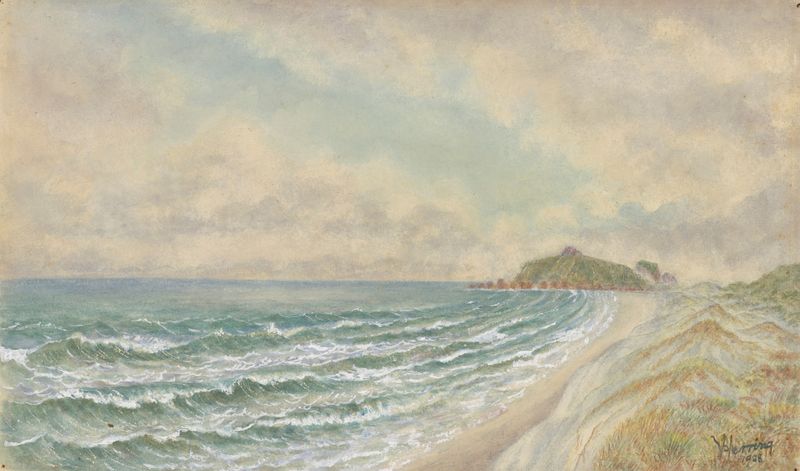
More Architecture Art
Browse all →
The statue of Liberty
Frédéric Auguste Bartholdi

View of Houses in Delft, Known as ‘The Little Street’
Johannes Vermeer

View of Houses in Delft, Known as ‘The Little Street’
Johannes Vermeer

The Cathedral in Rouen. The portal, Grey Weather
Claude Monet

The yellow house
Vincent van Gogh

The Church in Auvers-sur-Oise, View from the Chevet
Vincent van Gogh