Still Life — History & Facts
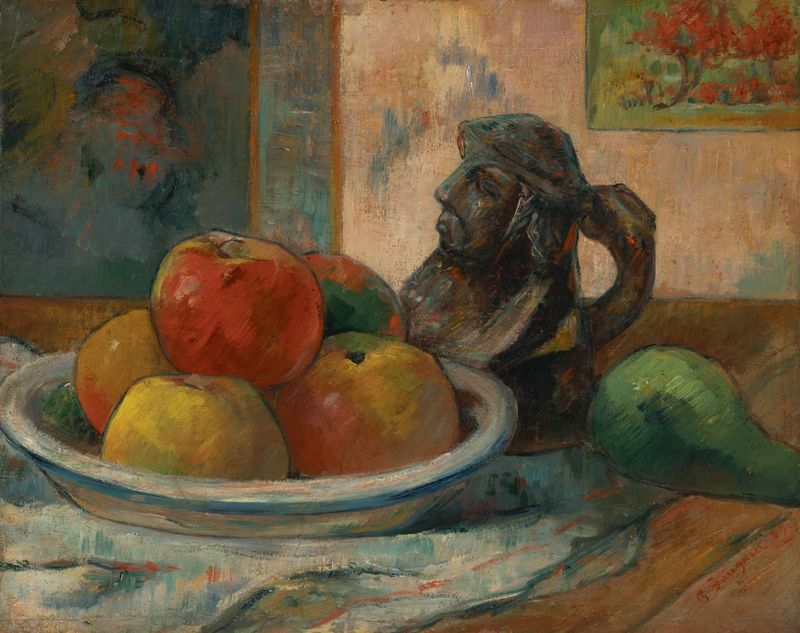
What if silence could speak through light? In the quiet embrace of stillness, dreams are captured in a delicate dance of color and form, whispering the secrets of existence. Look to the center, where a modest table is laden with a symphony of vibrant fruits: ripe peaches, luminous grapes, and a solitary pear, each meticulously rendered. Notice how the soft light cascades over the surfaces, casting gentle shadows that add depth and dimension. The warm palette envelops the viewer, inviting one to linger and observe the subtle play of texture on the fruit's skin, hinting at the artist’s skilled hand and keen eye for detail. Beneath the surface, there lies an emotional tension—a juxtaposition between the beauty of life and the inevitability of decay.
Each piece of fruit, while radiant and alluring, serves as a reminder of the fleeting nature of existence. The stillness of the composition resonates with a sense of longing or yearning, evoking dreams of what might have been. The artist's choice of arrangement suggests both abundance and transience, highlighting the eternal cycle of life and death. In the 18th century, Briglia created this work amidst a burgeoning interest in the still life genre, capturing the essence of Baroque aesthetics.
His time in Italy influenced his approach, navigating the shift from ornate grandeur toward a more introspective representation. As a skilled painter, he thrived in an era where the interplay between light and shadow became a hallmark, reflecting both the artistic and emotional complexities of his world.