Still Life in a Stable — History & Facts
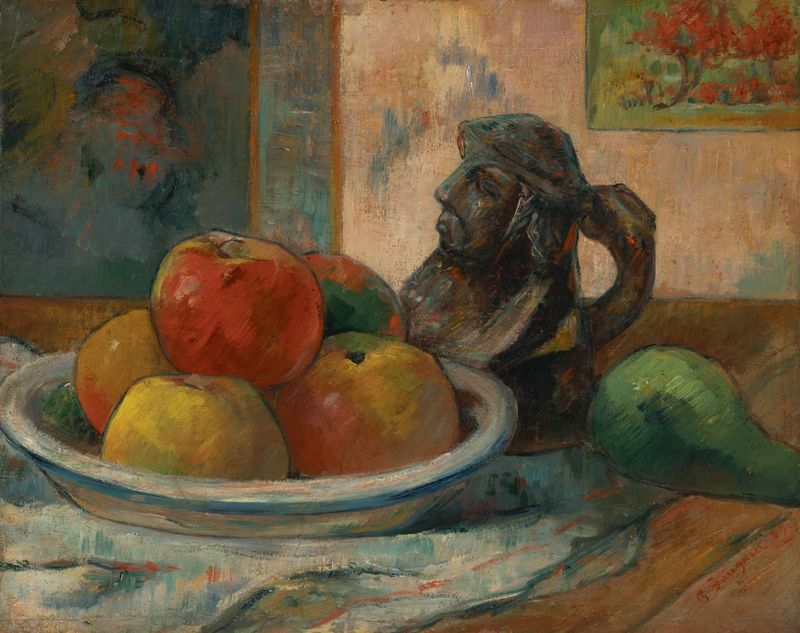
Could a single brushstroke hold eternity? The vibrancy of life captured in a still life evokes a divine conversation between nature and art, whispering secrets of existence within its stillness. Look closely at the arrangement on the table; the rich textures of fruit and the delicate sheen of metal draw your attention first. The soft, natural light spills into the stable, highlighting the lush reds and yellows of the produce—a feast not just for the eyes, but for the soul. Notice how the artist masterfully layers paint to create depth, each object harmonizing within the composition, inviting viewers to linger and explore the contrasts between the organic and the crafted. Delve deeper, and you'll find a profound interplay of life and decay.
The vibrant fruits juxtaposed against the sturdy, aged wood evoke a fleeting beauty, hinting at the transitory nature of existence. The subtle shadows play against the vibrant colors, suggesting the duality of celebration and loss, a sacred reminder of the divine in the mundane. Each brushstroke serves not only to capture the physicality of the objects but also to elevate them, transforming the ordinary into the extraordinary. François Cornelis Knoll painted this work in 1824 while living in the Netherlands, during a time when still life was experiencing a revival.
Art movements were shifting towards realism, and Knoll’s dedication to capturing the intimate moments of everyday life reflected this larger trend. In a world embracing the tangible, his work stood as a testament to the spiritual essence embedded in ordinary scenes.