Still Life: Melon, Fish Jar — History & Facts
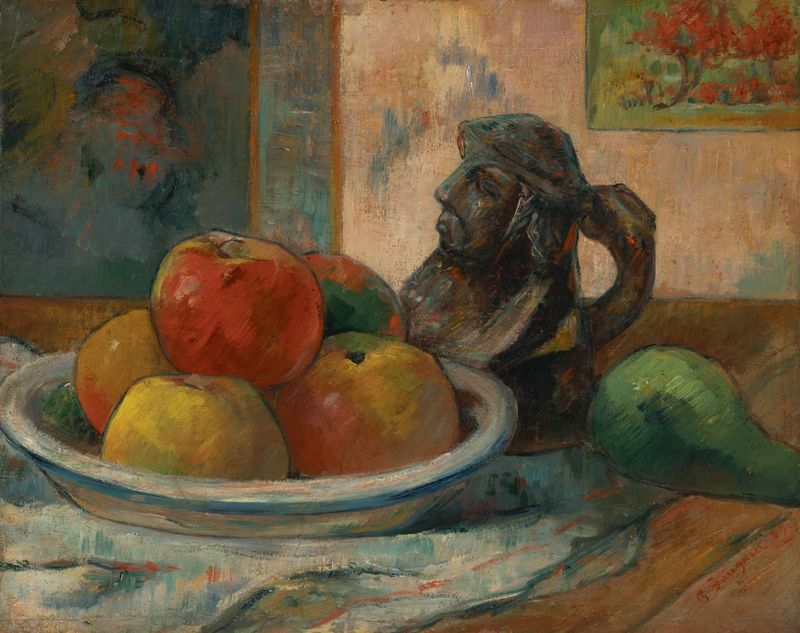
When did color learn to lie? The vibrant hues of the melon and the gleaming surface of the fish jar invite us to question the authenticity of what we see. Look to the left at the brilliant orange and yellow tones of the melon, its skin dappled with shadow and light. Notice how the brushstrokes dance across the surface, lending a sense of movement to this still life. The fish jar, positioned centrally, reflects the surrounding colors with an almost deceptive clarity, enticing the viewer to lean in for a closer look.
The asymmetrical arrangement, coupled with the bold palette, imbues the composition with a lively energy that defies the very notion of stillness. Beneath the surface beauty, hidden tensions emerge. The interplay of light and shadow hints at the transience of life; the melon's ripeness suggests both abundance and inevitable decay. Moreover, the reflection in the jar challenges perceptions of reality, blurring the lines between the objects and their surroundings.
Here, we confront the duality of existence — the vibrant life portrayed and the underlying inevitability of its end. The artwork was created around 1888, a time when the artist was deeply influenced by the post-impressionist movement. Working in Arles, France, during a period marked by personal struggles and artistic exploration, this imitator sought to channel the spirit of Van Gogh, embracing bold colors and expressive forms. In a world rapidly evolving toward modernity, capturing such intimate moments in vibrant detail became a means of both survival and expression.